
Oslo sits far enough north that daylight swings from barely six hours in December to nearly nineteen in June, which plays havoc with any fixed weekly class time. Short answer: QuranlyHub’s online classes for families in Oslo, Drammen and beyond get around that by letting you set the schedule yourself — a one-to-one, Ijazah-certified tutor for Noorani Qaida, Tajweed, Hifz, Tafseer or Quranic Arabic, on CET/CEST hours that move with you, plus a free trial class before you commit.
Norway’s Muslim population is estimated at around 200,000 to 285,000 people (roughly 4-5% of the population), according to Statistics Norway and other estimates, with the largest communities in Oslo and Drammen. Even in a well-served city, a specific tutor gender, teaching pace, or evening time slot can be hard to book locally. Online Quran classes in Norway solve that directly — your family is matched with an Ijazah-certified tutor and a schedule built around your own week, not the other way round. This guide covers how it works, alongside our full pricing page, Learn Quran Online overview, and comparison of local vs online Quran classes.

Norway’s Muslim Community: What’s Actually Known
Statistics Norway tracks members registered with Islamic congregations at around 200,000, while broader estimates of the total Muslim-background population run closer to 285,000. Oslo is home to Norway’s oldest mosque, the Central Jamaat-e Ahl-e Sunnat, founded in 1974, and remains the country’s largest and most established Muslim community, alongside Drammen.
Why Families in Norway Choose an Online Quran Academy
Most of Norway’s Muslim families are concentrated in and around Oslo, particularly the Grønland and Gamle Oslo areas, which means a family in Drammen or a smaller town often has far fewer local class options than one in the capital, and even within Oslo, Norway’s Muslim community spans Somali, Pakistani, Arabic, Kurdish and Turkish backgrounds, so a mosque class taught in one heritage language will not suit every household. Reading quran online in Norway sidesteps both problems at once: the tutor is matched to the language and pace your family actually needs. Learning online removes that geography problem completely: a tutor is chosen for teaching style and gender preference rather than postcode, and lessons can shift with the seasons instead of fighting Norway’s extreme swings in daylight.
- One-to-one, not group classes: full tutor attention every session, not shared among 6-8 students.
- Ijazah-certified tutors: a formal chain-of-transmission certificate verifying the tutor’s own recitation.
- Flexible scheduling: weekday evenings, weekends, or a mix, without a fixed classroom timetable.
- A genuine free trial: a real class with the actual tutor, not a sales consultation.
Quran Classes for Ladies and a Female Quran Teacher in Norway
Families across Norway regularly ask for a female tutor – for a daughter, or for their own lessons. Online removes the wait entirely, at no additional cost. Women can also book any of the seven courses one-to-one, at whatever pace suits them.
Tajweed Classes in Norway: Correcting Recitation One-to-One
In Norway, online Tajweed still means live, in-the-moment correction – makharij, elongation rules, the details self-study tools miss. A tutor watching your Mushaf and mouth over video call picks up the same mistakes an in-person teacher would, without a wait for a local slot.
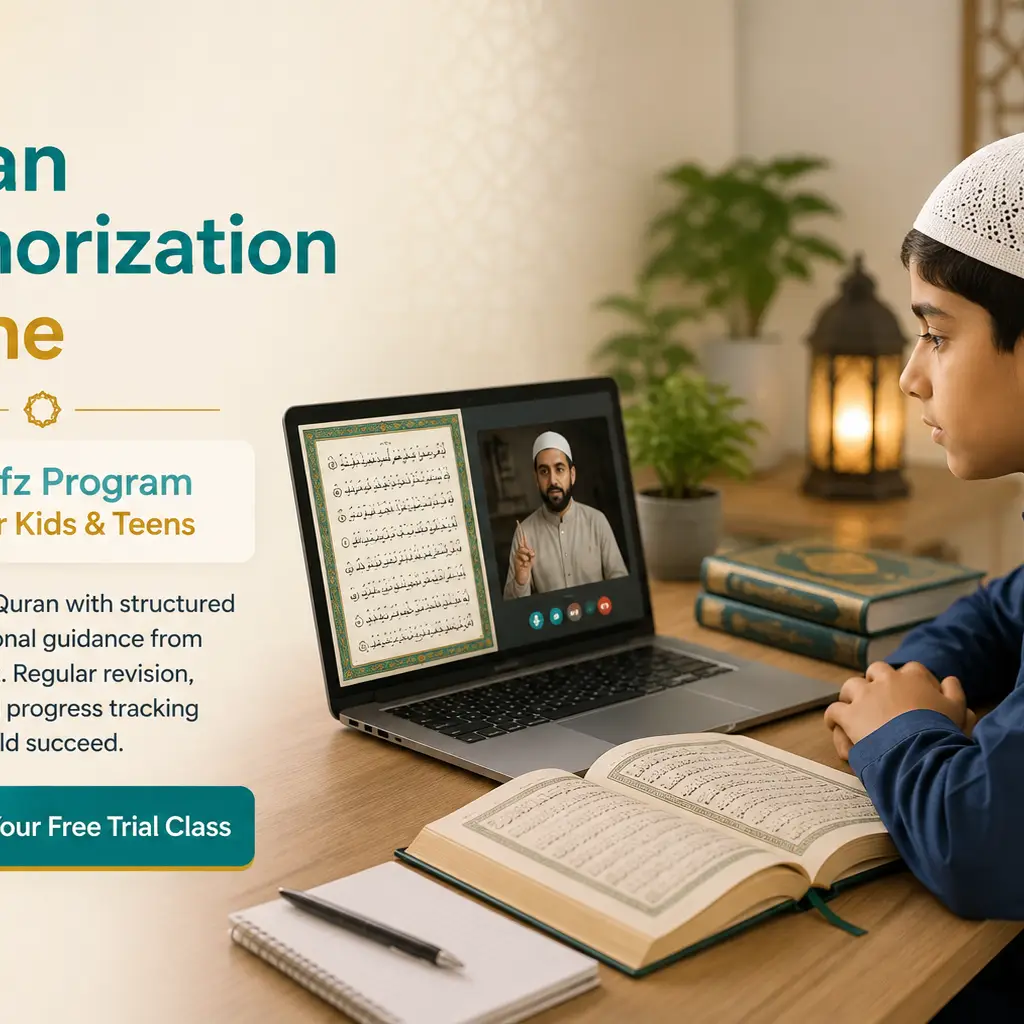
Hifz Course in Norway: Structured Memorization From Home
There’s no need for a residential programme to start Hifz for a student in Norway. Online classes keep the sabaq-sabqi-manzil structure intact, with a tutor tracking memorisation every session, scheduled around school.
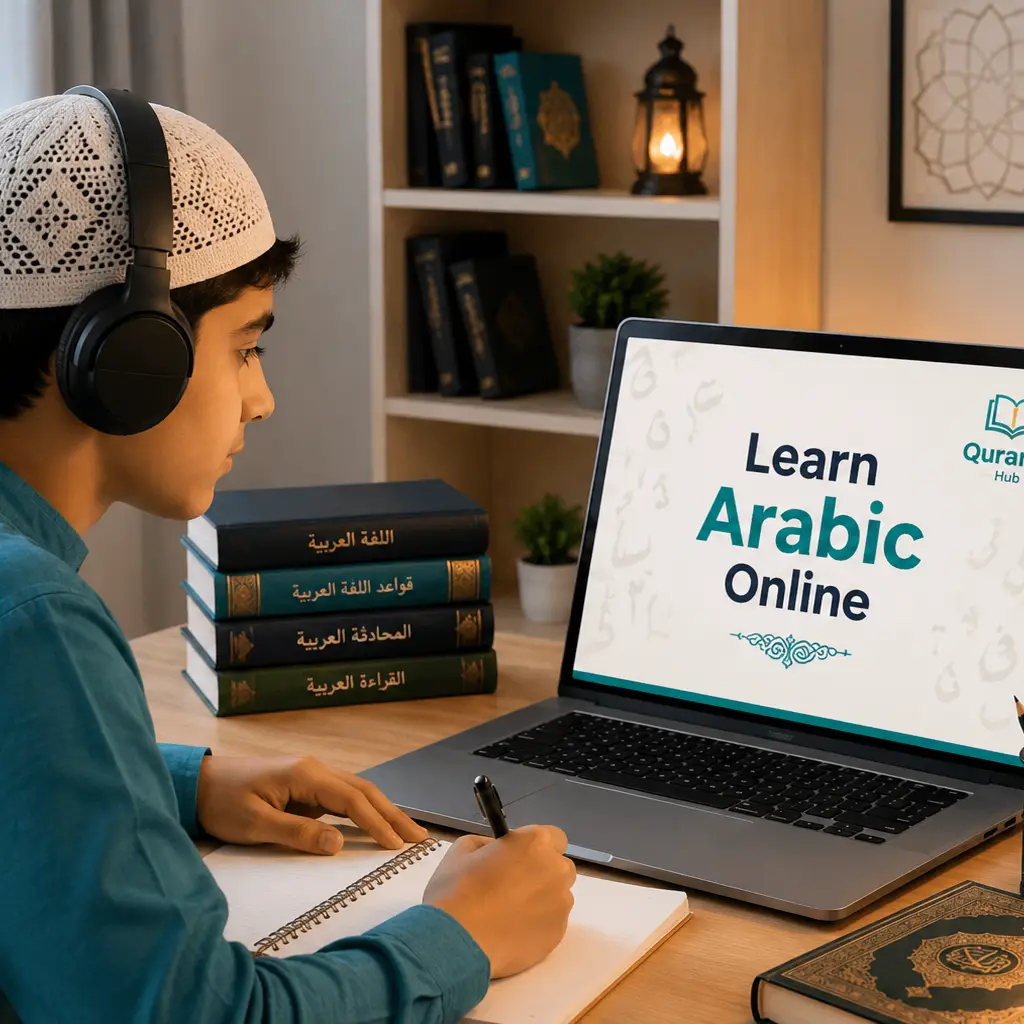
Quranic Arabic and Tafseer for Students in Norway
Beyond correct recitation, Norway students often want to follow the Quran’s own language. Quranic Arabic builds that grammar and vocabulary; Tafseer covers the meaning of each ayah using classical commentary such as Ibn Kathir and Al-Jalalayn – both one-to-one, for a student in Oslo or Drammen.
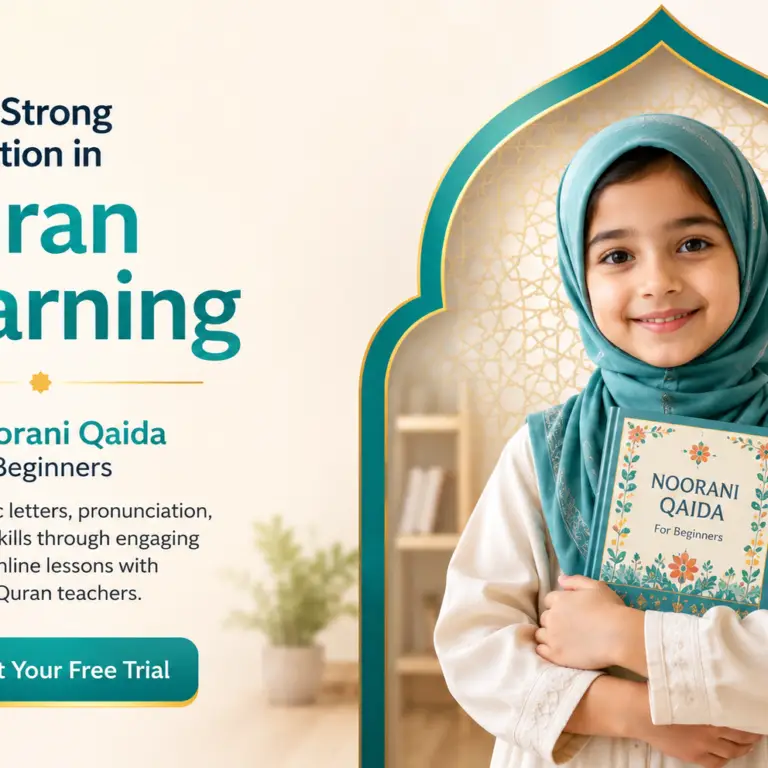
Noorani Qaida: Reading Quran Online in Norway From the First Letter
Most families starting quran online in Norway are beginning from zero, not continuing a class started elsewhere. Noorani Qaida covers exactly that: a structured, one-to-one foundation in Arabic letters and basic Tajweed rules before a student starts reading quran online in Norway for real. The same course works whether your child is five or you are learning alongside them, each at your own pace, with no group to catch up to.
Pricing: What You Actually Pay
Every standard course — Noorani Qaida, Tajweed, Advanced Tajweed, Hifz, Tafseer and Quranic Arabic — is priced the same, with four schedules to fit around a Norwegian school and work week:
| Plan | Classes / Month | Schedule | Price |
|---|---|---|---|
| Weekend Plan | 8 classes | Sat & Sun | $30/month |
| 3 Days a Week | 12 classes | Any 3 weekdays | $35/month |
| 4 Days a Week Most Popular | 16 classes | Any 4 weekdays | $40/month |
| 5 Days a Week | 20 classes | Mon to Fri | $45/month |
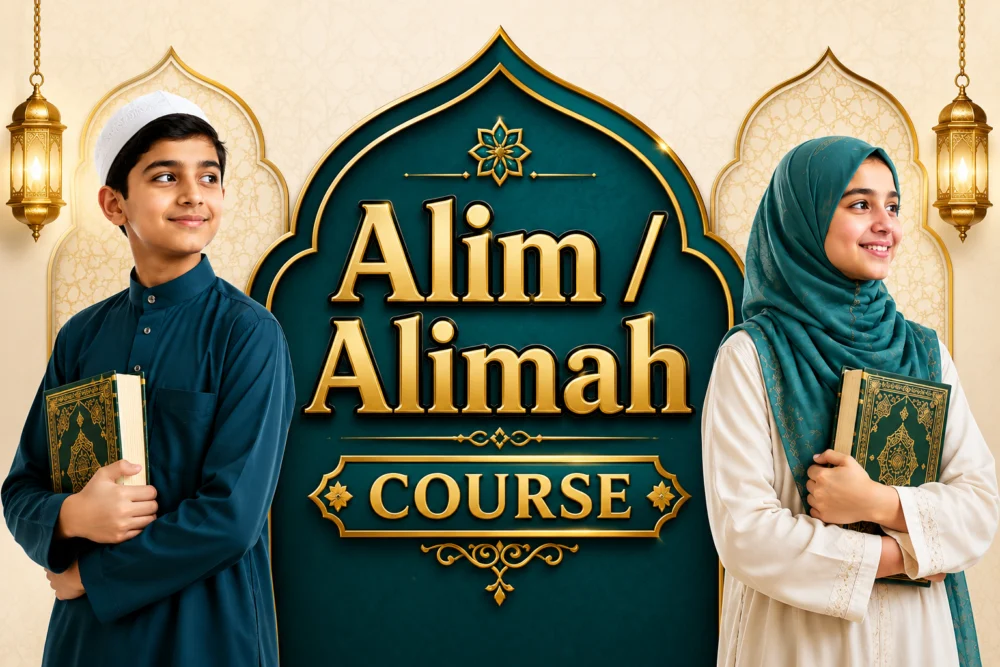
All plans include a free trial class, weekly progress updates, and a dedicated Ijazah-certified tutor. Enrolling siblings? Every additional child in the same family gets a 10% discount. See the full pricing page for the Alim & Aalimah scholar track.
All 7 Courses, One Platform
Whichever course your family starts with, the same tutor-matching and free trial process applies across all seven, for every age from Noorani Qaida beginners to the Alim & Aalimah scholar track:



Book Your Free Trial Class
See for yourself before you commit to a plan. Book a free trial class with an Ijazah-certified tutor, matched to your child’s or your own age, level and preferred schedule.
Explore Our Other Courses
Also Available in Other European Countries
Related Guides
Frequently Asked Questions
Is a female Quran teacher in Norway available online?
Yes. You can request a female tutor for daughters or for women’s classes at no extra cost when you book your free trial — no waitlist, since scheduling isn’t limited to whoever teaches locally.
What times work for Norway’s time zone?
Tutors keep availability across time zones, including slots that map well onto Norway’s CET/CEST evenings and weekends, so classes fit around school and work rather than the other way round.
Can my child join a Hifz course in Norway online?
Yes. An online Hifz course in Norway follows the same sabaq-sabqi-manzil revision structure as an in-person program, with a dedicated Ijazah-certified Hifz tutor tracking memorization one-to-one.
Are there online Islamic courses for ladies in Norway, not just children’s classes?
Yes. Adult women can book any of the seven courses one-to-one with a female tutor, at a pace and time that suits their own schedule rather than joining a children’s class.
How much do online Quran classes in Norway cost?
Plans range from $30/month (8 classes, weekends only) up to $45/month (20 classes, Monday to Friday), 30 minutes each, billed in USD regardless of your location. The 4-days-a-week plan at $40/month is the most popular. Families enrolling more than one child get a 10% discount. See the full pricing page.
Is there a free trial before I pay?
Yes, every course starts with a free trial class with a real tutor, so you can judge fit before choosing a plan.
Where should a complete beginner start when learning to read quran online in Norway?
Start with Noorani Qaida. It is a one-to-one foundation course covering Arabic letters and basic Tajweed rules, built for anyone beginning quran online in Norway with no prior reading experience.