Kosovo is one of Europe’s youngest and most Muslim-majority countries, with the large majority of its population Muslim and a median age still in the twenties — meaning most parents raising children today grew up after independence in 2008. Short answer: QuranlyHub serves those young families across Pristina, Prizren and beyond with a one-to-one, Ijazah-certified tutor for Noorani Qaida, Tajweed, Hifz, Tafseer or Quranic Arabic, on a CET-friendly schedule, with a free trial class first.
Kosovo is home to an estimated 1,663,412 Muslims (95.6% of the population) – one of the highest Muslim population shares of any country in Europe, anchored by community hubs such as mosques across Pristina and the historic old town of Prizren. Even in a country with a large or long-established Muslim population, finding a specific tutor gender, teaching pace or evening time slot can still mean a wait. Online Quran classes in Kosovo solve that directly – your family is matched with an Ijazah-certified tutor and a schedule built around your own week. This guide covers how it works, alongside our full pricing page, Learn Quran Online overview, and comparison of local vs online Quran classes.

Kosovo’s Muslim Community: What’s Actually Known
Kosovo is home to an estimated 1,663,412 Muslims (95.6% of the population) – one of the highest Muslim population shares of any country in Europe. The community is organised around mosques and centres including mosques across Pristina and the historic old town of Prizren, with families spread across Pristina, Prizren and beyond.
Learning the Quran in Kosovo: Mosques, Old Towns, and the School Year
The section before this one says what is actually known about Kosovo’s Muslim community: an estimated 1,663,412 Muslims, 95.6 percent of the population, organised around mosques and centres, with families spread across Pristina, Prizren and beyond. What it does not say is which mosques those are, which towns the families live in, and how the school year shapes the class timetable. Here is that part.
The Mosques Pristina and Prizren Families Actually Use
Pristina’s Imperial Mosque, also called the King’s Mosque, carries a six-line inscription above its entrance that dates it to 1461, built on the orders of Sultan Mehmed II. It is the oldest mosque in the capital, and one of the oldest in the country. In Prizren, the Sinan Pasha Mosque, built in 1615 for Sofi Sinan Pasha, looks over the old town from the main street, a square building fourteen metres by fourteen, painted inside in colours and Arabic script, restored between 2007 and 2011 and reopened as a mosque. Gjakova holds the Hadum Mosque, from the late 16th century. Peja holds the Bajrakli Mosque. Prizren also holds the Bajrakli Mosque of 1573 and the Emin Pasha Mosque of 1832. Across the Ottoman centuries, 358 mosques were built in Kosovo, 29 of them in Prizren alone, and the town still holds around 40 mosques today. The Islamic Community of Kosovo, the Bashkësia Islame e Kosovës, is the main Islamic institution in the country. A big mosque is a place to pray, not a place to learn one-to-one. The children’s Quran classes at a local mosque are group classes, taught after school or at weekends, and a parent who wants a single tutor listening to one child’s recitation, week after week, is looking for something a group class does not offer by design. That is the gap an online class fills.
Pristina, Prizren, Peja, and Everywhere Else
The post names Pristina, Prizren and Gjakova, and those three towns do hold a large share of the country’s Muslim families, but the community does not live in three towns. Families also live in Peja, Mitrovica, Ferizaj and Gjilan, and in the smaller towns of the west and the east. Many Kosovo families have relatives working in Germany or Switzerland, and many children grow up with one parent abroad and the other at home, so the week is often built around phone calls and visits as much as around school. A family in Peja faces a different trip to the Bajrakli Mosque than a family in Gjilan does to its own mosque, and a parent working shifts in Pristina faces a different week than a parent working office hours. Online classes remove the town from the decision entirely. You choose a tutor by teaching style, by gender, and by specialism, not by which town you happen to live in. The class comes to your living room, at a time that fits your week, whether that week runs on school hours, shift patterns, or both.
The School Year Starts on 1 September
The timetable is where Kosovo differs most from the cities this site usually writes about. The state school year starts on 1 September, and the ministry sets the calendar each year, so exact dates can shift: in 2021 the start was postponed to 13 September, and in January 2026 the second semester was pushed back to 12 January after flooding. The winter break falls over New Year, and the school year runs into the summer. What that means for a Quran class is simple: the after-school slots, roughly 4 to 7 in the evening, are the ones every family wants, and the weekend is Saturday and Sunday, so a Friday class is an ordinary after-school slot, not a weekend one. Ramadan is expected to start around 8 February 2027, with Eid al-Fitr expected around 9 or 10 March, though the moon sighting decides both dates. The time zone is Central European Time (CET), UTC+1 in winter, and Central European Summer Time (CEST), UTC+2 in summer. The clocks go back on Sunday 25 October 2026 and forward on Sunday 29 March 2027. A tutor in Pakistan is four hours ahead of Pristina in winter and three hours ahead in summer, so a 5 pm class in Pristina is 9 pm for the tutor in winter and 8 pm in summer, still an evening class, not the middle of the night. The class that fits is the one booked around the school year, not against it.
Why Families in Kosovo Choose an Online Quran Academy
Prizren’s Ottoman-era mosques give the city one of the Balkans’ richest concentrations of Islamic architecture and history, but everyday class capacity hasn’t always kept pace with Kosovo’s young, fast-growing population — popular local teachers fill up quickly. Online tutoring adds capacity without adding buildings: a family in Pristina, Prizren or a smaller town gets a tutor matched to their child’s pace, on a schedule that fits around Kosovo’s own school calendar.
- One-to-one, not group classes: full tutor attention every session, not shared among 6-8 students.
- Ijazah-certified tutors: a formal chain-of-transmission certificate verifying the tutor’s own recitation.
- Flexible scheduling: weekday evenings, weekends, or a mix, without a fixed classroom timetable.
- A genuine free trial: a real class with the actual tutor, not a sales consultation.
Quran Classes for Ladies and a Female Quran Teacher in Kosovo
Kosovo households often ask for a female tutor specifically, whether for a daughter or for themselves. That’s simply available online, with no premium and no wait. Women can take any course one-to-one, on a schedule that fits their week.
Tajweed Classes in Kosovo: Correcting Recitation One-to-One
For students in Kosovo, online Tajweed still means real-time correction – makharij, elongation, the small mistakes that are hard to self-diagnose. A tutor on video, following your Mushaf and mouth, catches what an in-person teacher would.
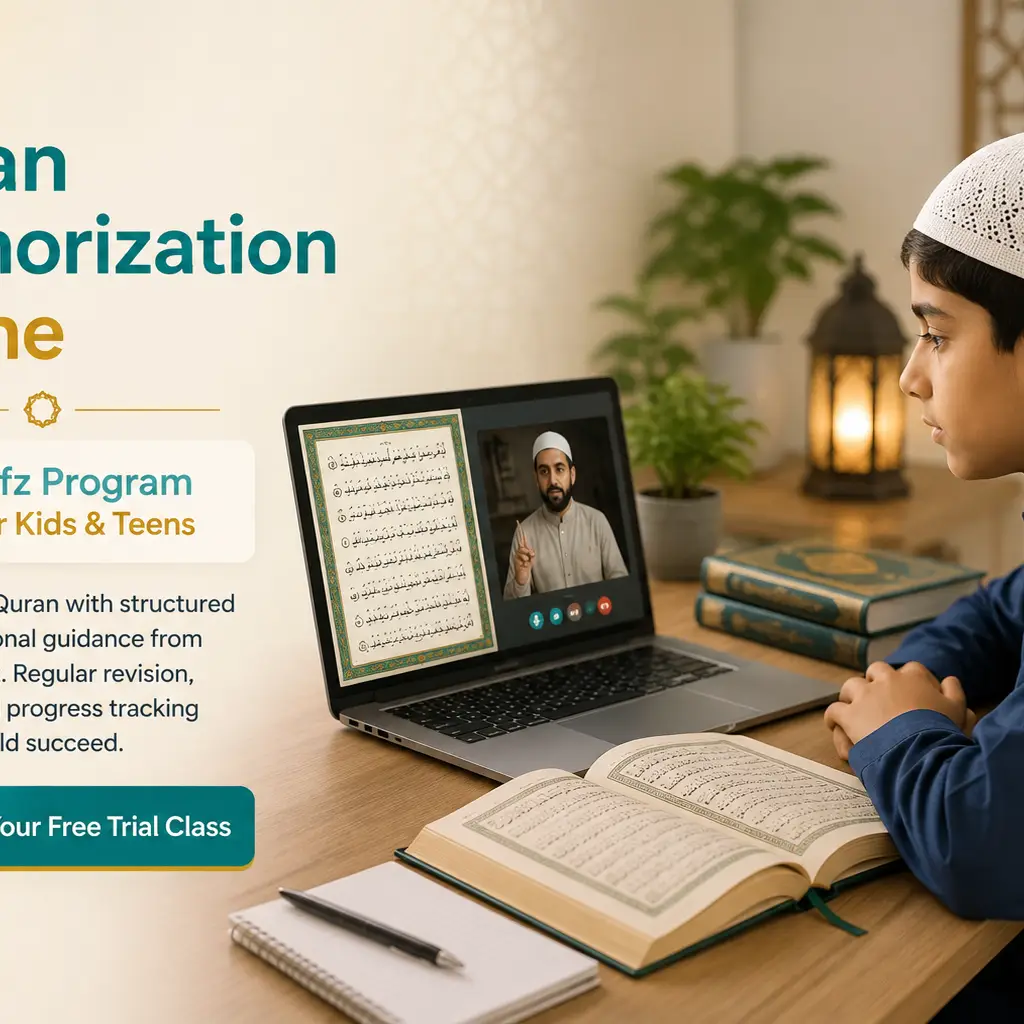
Hifz Course in Kosovo: Structured Memorization From Home
Memorisation for a Kosovo student doesn’t require boarding away from home. Online Hifz keeps the sabaq-sabqi-manzil structure a residential programme would use, with progress logged every class and timing built around school.
The Free Trial in Kosovo: One Real Class Before You Pay
This page promises a free trial before any payment, and the questions at the end say every course starts with one. Here is what that trial actually is, what other academies offer instead, and the four questions that tell you whether a trial is real.
What Happens in the Free Trial Class
QuranlyHub offers one free class, thirty minutes, live and one-to-one, with the actual tutor your child would keep. No card, no payment details, no commitment. That is the whole free part, and it is labelled as exactly that: one class. The tutor listens to the student recite what they already know, even if that is just a short surah. Then the tutor checks where mistakes creep in, not just during recitation but during memorization, and gives a genuinely honest estimate of pace. Not an inflated one. A child who already knows Juz Amma gets a different plan from a child starting from the first page, and the trial is where that difference shows up. A parent can sit in on the trial, and should. Watch how the teacher handles a hard question, whether they admit what they do not know, and whether the child looks forward to the next one. If the “free class” turns out to be a scripted sales call with no actual recitation involved, that is a sign to look elsewhere. The whole point of a trial is seeing the teaching itself.
One Free Class, Two, or Three: Trial Shapes in the Market
Other academies do it differently. Quran Pak Teacher gives three free trial classes before its monthly plan starts. Online Quran Ilm Academy gives three free trial classes too. Quran In Depth gives one free trial lesson. Tarteel House gives a free 40-minute trial session. None of these is a trick. A three-class trial gives you more time to judge the teacher, and a one-class trial gives you less. The honest question is not how many free classes you get. It is what the academy says the free part is, before you book. If the website says “free trial” and the booking form asks for a card, walk away. If it says three classes free and the trial is three real classes with a real teacher, that is a fair offer. And if it says “free” with no end date and no price anywhere, that is usually a free first class followed by a monthly plan that only appears after you have already invested an hour of your time.
Four Questions Before You Book Any Trial
Before you book any trial, ask four things, and ask them in writing if you can. First, how many free classes, exactly, and how long is each one? Second, what happens the day the free part ends: does the plan start automatically, or do you choose? Third, what is the monthly price after the trial, in writing, before the first class? Fourth, is there a registration fee, an admission fee, or any one-time charge on top of the monthly price? An academy that hides its price behind “contact us for pricing” until you are already invested is telling you something about how it will treat you later. The trial is where that gets tested. If you want the same decision made on price grounds instead of learning grounds, our guide on how much online Quran classes cost sets out the same questions from the price side.
Quranic Arabic and Tafseer for Students in Kosovo
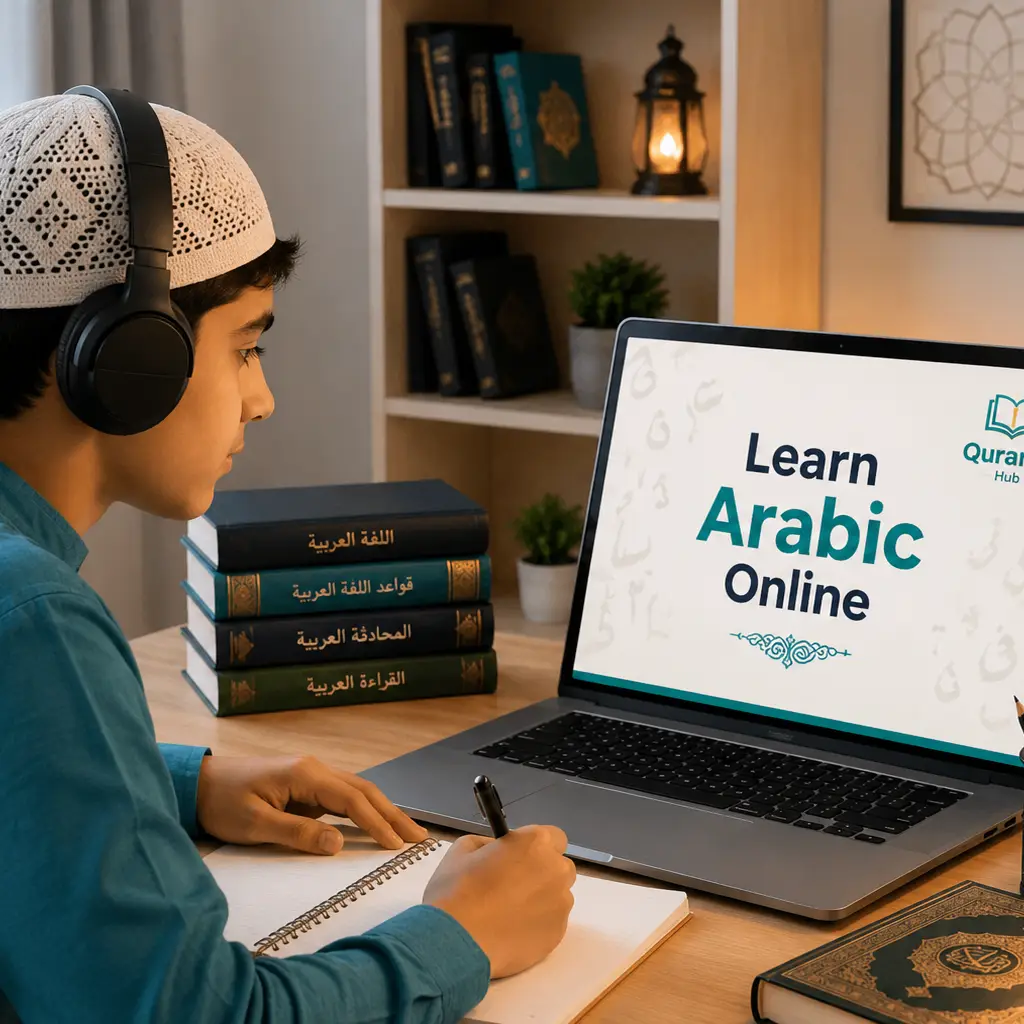
For Kosovo students who want more than correct recitation, Quranic Arabic covers the grammar and vocabulary needed to follow the text directly, and Tafseer explains each ayah’s meaning via classical commentary such as Ibn Kathir and Al-Jalalayn – both one-to-one, for a student in Pristina, Prizren or Gjakova.
What Kosovo Families Actually Pay: €28 to €40, and How Long Each Course Takes
A price on its own tells you almost nothing. Twenty-eight euros a month could mean eight classes or twenty. It could mean a group, or one-to-one. It could mean the same teacher every week, or whoever happens to be free. So here is what QuranlyHub’s fee actually buys, in plain numbers, and then how long each course takes, because the price of a month and the length of a course are two different questions. When a family in Pristina searches “online quran classes in kosovo”, the number they actually need is the monthly one, in euros, with the class count next to it. Here it is.
The Plans, in Plain Numbers
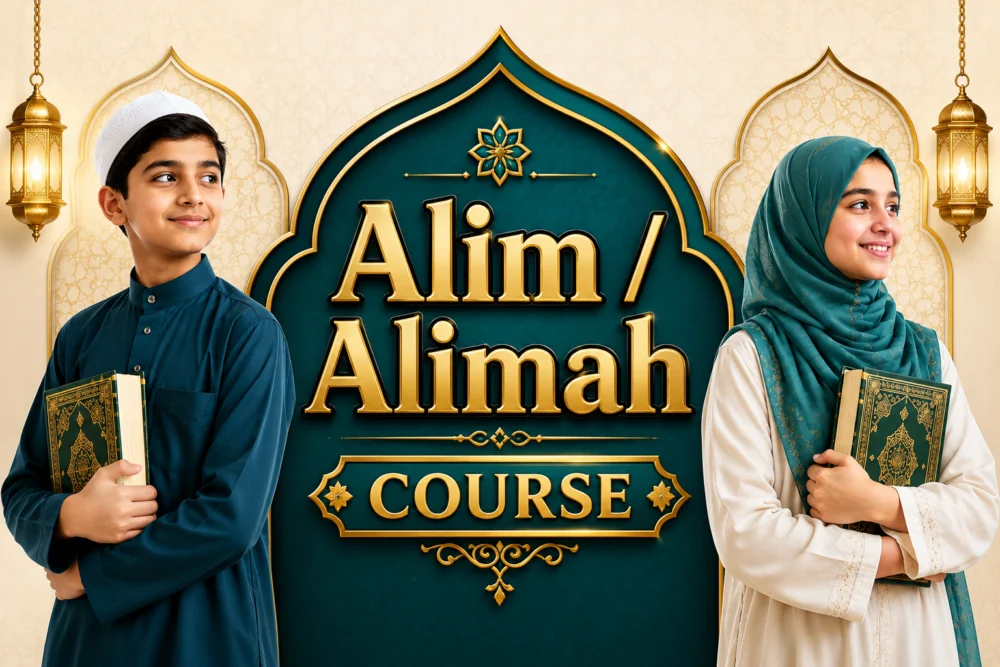
The plans on this page run from €28 a month for eight classes to €40 a month for twenty, all of them live, one-to-one, thirty minutes each, on Zoom. Eight classes a month means weekends only, Saturday and Sunday, which is the local weekend here. Twelve classes means any three weekdays. Sixteen classes means any four weekdays, and that is the most popular plan. Twenty classes means Monday to Friday. The trial class is free, with no card needed, and the second child in a family gets a 10 percent discount. The standalone Tafseer course costs €70 a month for twelve classes, three days a week, taught in Urdu or English. If you want to know what a good Tafseer course covers before you choose one, our best Quran Tafseer guide sets out the same questions from the student’s side. The Alim and Aalimah scholar track is a different plan because it covers several subjects at once, in longer sessions: €80 a month for two classes a week, or €100 a month for four classes a week, each session 40 minutes. Every plan includes a monthly progress report that shows where the student stands, and the same teacher each week, so the teacher knows which page the student is on without having to ask.
The market around Kosovo is wide, and it is priced in euros. My Online Quran Tutor charges in euros: €28 a month for eight classes, €37 for twelve, €42 for sixteen and €46 for twenty, with no registration fee and cancel anytime. Quran In Depth charges from €35 a month, with a published range of €32 to €85. Quran Pak Teacher charges €30 a month in Europe for twenty classes. 92 Campus charges €30 a month for three days a week and €40 a month for five days a week. Tarteel House charges by the lesson, not by the month: €120 for six lessons, €220 for twelve and €400 for twenty-five, each lesson 40 minutes. Online Quran Ilm Academy charges €40, €45, €55 and €60 a month in euros for eight, twelve, sixteen and twenty classes. QuranlyHub’s plans sit at or below the low end of that market, in euros, with the same 30-minute one-to-one format throughout.
How Long Each Course Actually Takes
A parent’s second question, after the price, is how long it takes. Noorani Qaida takes 2 to 3 months on the 16-class plan, or 3 to 5 months on the 8-class plan, and at the end of it a child reads the Quran on their own. Hifz takes 2 to 2.5 years, at 7 to 8 new lines a day, with daily revision of the old lessons, sabaq, sabqi and manzil, and the youngest children finish Juz Amma in 2 to 3 months. Quranic Arabic takes 9 to 12 months. No confirmed duration exists for Tajweed or for Tafseer, and this page does not invent one: Tajweed takes as long as the student’s reading needs, and Tafseer is taught as an ongoing course, not a fixed-length one. Homework is Hifz-only: the student revises what the teacher set, nothing else. If your child is finding a page hard, our guide on how to memorize the Quran step by step walks through sabaq, sabqi and manzil the way the teacher does it, so you can see what the method is and why it works. The point of the durations is not to promise a date. It is to show that the academy has a plan for each course, and that the plan is measured in months and years, not in vague promises.
The Fine Print: Advance Payment, Refunds, and Makeup Classes
The price is only half the story. Fees are paid in advance by bank transfer, and the class runs for the month that has been paid for. If a student leaves, there is no refund for the month, and a family should know that before they pay. If the teacher cannot continue, the fees are refunded, because that is the academy’s side of the same promise. If the teacher misses a lesson, a makeup class is arranged. If the student misses one, it is not made up, and the month is not extended. A student can stop at the end of any month. None of this is hidden in a terms page. It is written here because a family who knows the fine print before the first lesson will never have to argue about it after the tenth. Ask any academy these four questions before you pay: how do I pay, what happens if we leave, what happens if the teacher leaves, and what happens if a lesson is missed. The answers should take one minute, and they should match what is written on the page.
Pricing: What Online Quran Classes in Kosovo Actually Cost
Tafseer costs €70 a month for 12 classes, three days a week. The following plans cover Noorani Qaida, Tajweed, Advanced Tajweed, Hifz and Quranic Arabic, with four schedules to fit around a work and school week in Kosovo:
| Plan | Classes / Month | Schedule | Price |
|---|---|---|---|
| Weekend Plan | 8 classes | Sat & Sun | €28/month |
| 3 Days a Week | 12 classes | Any 3 weekdays | €32/month |
| 4 Days a Week Most Popular | 16 classes | Any 4 weekdays | €36/month |
| 5 Days a Week | 20 classes | Mon to Fri | €40/month |
All plans include a free trial class, monthly progress reports, and a dedicated Ijazah-certified tutor. Enrolling siblings? Every additional child in the same family gets a 10% discount. See the full pricing page for the Alim & Aalimah scholar track.
The Safety Question: Kosovo’s Child Protection Law, and What Pristina Parents Can Actually Check
A free trial tells you what a class feels like. It does not tell you who is teaching it, or whether anyone has actually checked that person. For a child learning online, that is the question to settle first, before the price, before the timetable, before anything else. And it is the question most academies answer with a badge on their website, which is the weakest answer of all.
Kosovo Has a Child Protection Law, but No Certificate for an Overseas Tutor
Here is the honest limit, stated plainly. Kosovo takes child safety seriously in law: the Law on Child Protection, Law No. 06/L-084, was adopted on 27 June 2019 and entered into force on 17 July 2020, and it protects children against all forms of physical and mental violence, abuse, exploitation and neglect, with each municipality required to designate at least one child-protection worker. None of that gives a parent a certificate to ask for. A Kosovo check is a check for people working with children in Kosovo, and an online tutor teaching from Pakistan cannot hold one, because no such certificate exists for an overseas tutor. So when an academy tells a Pristina family that all its tutors are “safeguarding-checked” for teaching in Kosovo, the parent should ask what that actually means, and in which country the check was done. A badge on a website is not a check. What a parent can check is a real person, a real qualification and a real class. Ask, too, who granted the teacher’s Ijazah and in which subject, because a named teacher with a named chain is the oldest check in this tradition. What QuranlyHub does instead is say plainly what has been done. Teachers are identity-verified and reference-checked before they take a class, and the academy names a safeguarding contact, Adeel Ahmad, so a family always knows who to write to.
Four Checks Before the First Lesson
The trial class is the real test, and a parent should treat it that way. Sit in on it, or ask a family member to. Watch how the teacher handles a hard question, whether they admit what they do not know, and whether the child looks forward to the next one. Ask for the lesson to be recorded, because a recording lets the family hear it later, and a teacher who welcomes a recording has nothing to hide. Check that the only contact between the teacher and the student is the official channel. There is no private messaging, no personal number, and no side arrangement. If any of those appear, stop the class and write to the safeguarding contact. Four things, then, before you commit to anything. Sit in on the trial. Ask for a recording. Confirm there is no private contact outside the official channel. Know the name of the safeguarding contact. At QuranlyHub that contact is Adeel Ahmad, who answers families directly. None of these takes more than an hour, and together they tell you more about an academy than any claim on its website.
Daughters and Sisters: A Female Teacher Throughout
Girls and daughters learn only with a female teacher, and that should not cost extra. At QuranlyHub a female teacher is available at no extra cost, and the rule holds for every course, from Qaida and Islamic Studies to the Alim track. The female teacher is a Hafiza, and she teaches the same courses as the male teachers, so a daughter is not offered a thinner version of the timetable. The class runs the same way, on the same Zoom setup, for the same 30 minutes. The camera is optional for adult sisters, and the student decides how the class looks. What matters is that the family controls the setup from the start, not that the academy decides it for them. If you are weighing this choice, our guide to finding a female Quran teacher online asks the same questions a family would ask, so you can see what a good answer looks like before you book. A student who has already asked these questions before the trial will not need to ask them again after it.
All 7 Online Quran Courses in Kosovo, One Platform
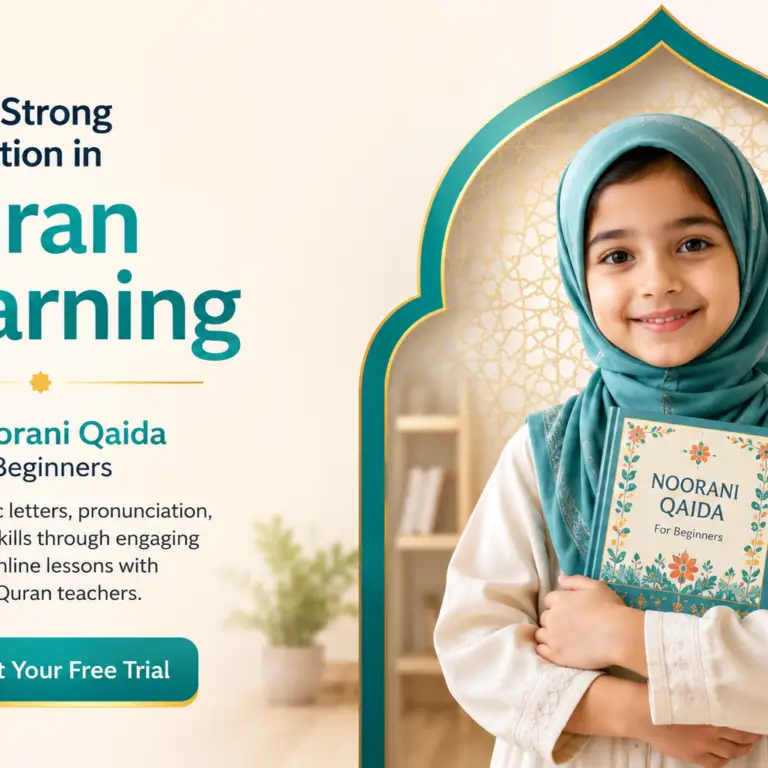
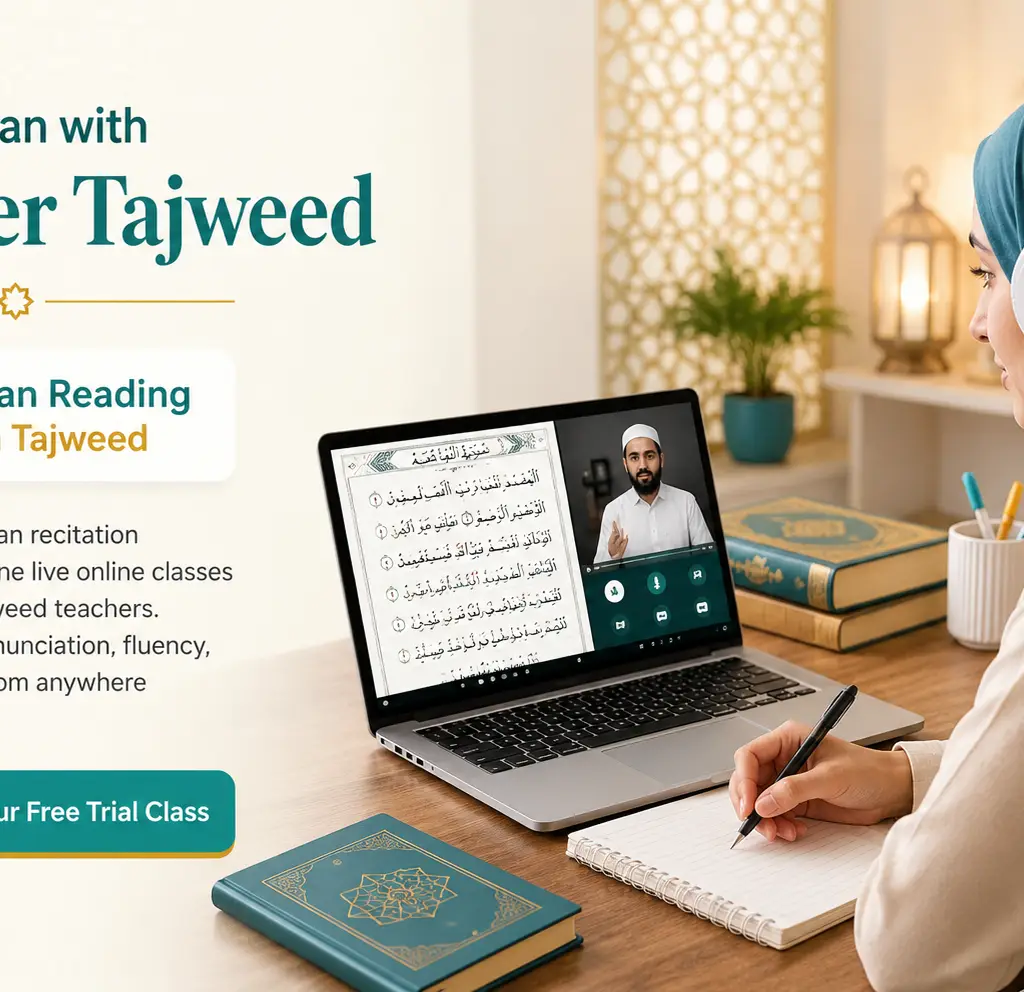
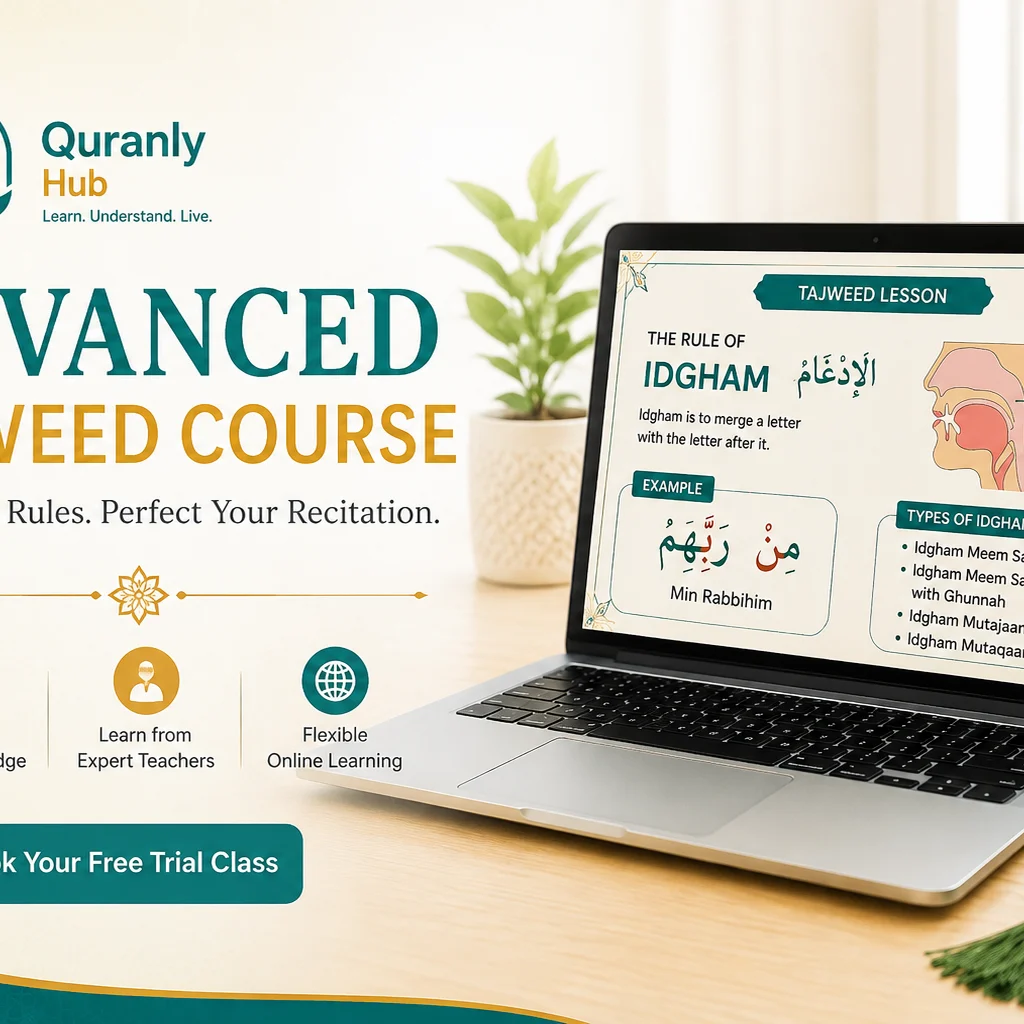
Whichever course your family starts with, the same tutor-matching and free trial process applies across all seven, for every age from Noorani Qaida beginners to the Alim & Aalimah scholar track:

Book Your Free Trial Class
See for yourself before you commit to a plan. Book a free trial class with an Ijazah-certified tutor, matched to your child’s or your own age, level and preferred schedule.
Explore Our Other Courses
Also Available in Other European Countries
Related Guides
Frequently Asked Questions
Is a female Quran teacher in Kosovo available online?
Yes. You can request a female tutor for daughters or for women’s classes at no extra cost when you book your free trial – no waitlist, since scheduling isn’t limited to whoever teaches locally.
What times work for Kosovo’s time zone?
Classes are scheduled around Central European Time, including evening and weekend slots, so lessons fit around school and work.
Can my child join a Hifz course in Kosovo online?
Yes. An online Hifz course follows the same sabaq-sabqi-manzil revision structure as an in-person programme, with a dedicated Ijazah-certified Hifz tutor tracking memorisation one-to-one.
Are there online Islamic courses for ladies in Kosovo, not just children’s classes?
Yes. Adult women can book any of the seven courses one-to-one with a female tutor, at a pace and time that suits their own schedule.
How much do online Quran classes in Kosovo cost?
Plans range from €28/month (8 classes, weekends only) up to €40/month (20 classes, Monday to Friday), 30 minutes each. The 4-days-a-week plan at €36/month is the most popular. Families enrolling more than one child get a 10% discount.
Is there a free trial before I pay?
Yes, every course starts with a free trial class with a real tutor, so you can judge fit before choosing a plan.