Short answer: Online Quran classes give Muslim families in Rotterdam access to live, one-on-one Ijazah-certified tutors across Noorani Qaida, Tajweed, Hifz, Tafseer and Quranic Arabic, scheduled around Rotterdam time with a free trial before any payment. Families searching for online quran classes in rotterdam will find full pricing, scheduling and trial-class details below.
Rotterdam has one of the highest Muslim population shares of any Dutch city — estimated at around 13-14% of its roughly 655,000 residents — concentrated in areas including Feijenoord, Delfshaven and Charlois.
Why Rotterdam Families Are Choosing an Online Quran Academy
Most Rotterdam families start by looking for a tutor within their own neighbourhood, and usually find a short, often-full list. Moving online removes that limit entirely: you select a tutor by teaching style, gender and specialism, not simply by which district you live in.
- One-to-one, not group classes: full tutor attention every session, not shared among six or more students.
- Ijazah-certified tutors: a formal chain-of-transmission certificate verifying the tutor’s own recitation.
- Flexible scheduling: weekday evenings, weekends, or a mix, without a fixed classroom timetable.
- A genuine free trial: a real class with the actual tutor, not a sales consultation.
Learning the Quran in Rotterdam: Mosques, Weekend Schools, and the Waiting List
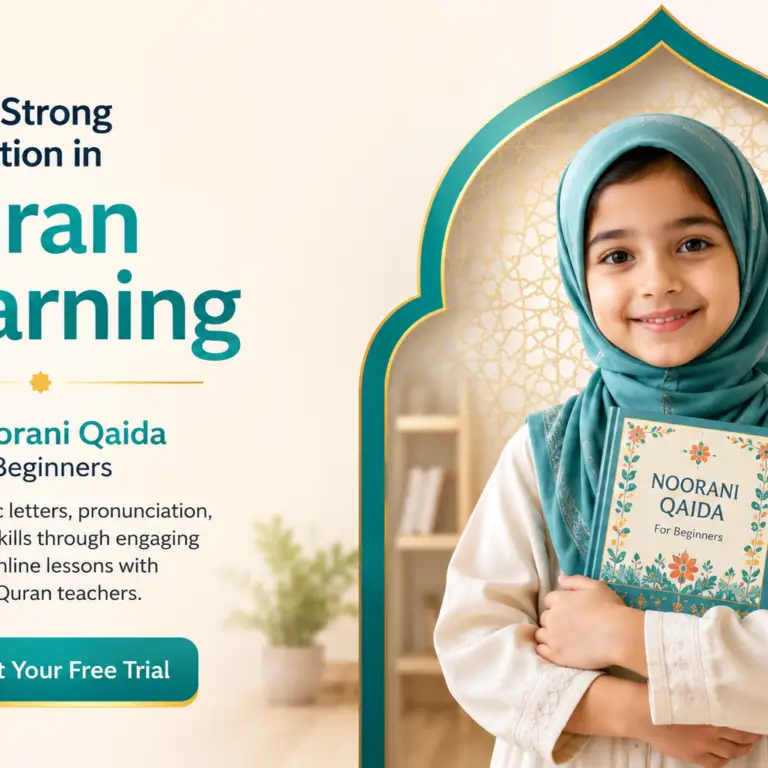
Most Rotterdam families start by looking for a Quran teacher at the mosque. That is the natural first step, and it should be. But a mosque class and a one-to-one tutor are different things, and the first section on this page already says so. What it does not say is what the local options actually look like, and where they stop. Here is that part.
Essalam, Mevlana, and the Weekend Mosque Schools
Rotterdam’s two best-known mosques sit on opposite sides of the city. The Essalam Mosque, near Afrikaanderplein in Feijenoord, is the largest mosque in the Netherlands. It opened in December 2010, has room for around 1,500 worshippers, and serves mainly the Moroccan community. The Mevlana Mosque in Delfshaven opened in 2001, with a turquoise dome and 42-metre minarets, and serves the Turkish community. Directories list more than twenty mosques and prayer places across the city, and most of them run a weekend mosque school, a moskee school, on Saturday and Sunday mornings. Children learn together, in a group, with other children from the same neighbourhood. That is the part a weekend school does well. A child hears the Quran read aloud by other children, learns the routine of going to the mosque, and grows up knowing the building. What a group cannot do is listen to one child read, line by line, and correct every letter. A teacher with a dozen children in front of them hears each child for a few minutes, not a full lesson.
What a Local Class Can and Cannot Give
A local class has three limits, and none of them is the mosque’s fault. The first is attention. A weekend class is a group, sometimes fifteen or twenty children in a room, and the teacher’s time is shared across all of them. The second is the timetable. The class runs when the mosque runs it, usually a weekend morning, and a family fits around that, not the other way round. The third is the waiting list. The first section on this page already says the local list is often full, and it is. A popular class fills up, and a family that arrives a term late waits. None of this makes the mosque school a bad choice. For many children it is the right start, and it costs little or nothing. But a child who needs individual correction, or a family that moved to Rotterdam-Noord or IJsselmonde, far from the big mosques, often finds there is nothing within a reasonable drive at all. That is not a failure of the mosque. It is what free, community-funded teaching can sustain, and it is honest to say so. If your local mosque has a class with a place open, take it. The question is only whether a place is actually open, and the only reliable way to find out is to call the mosque and ask, not to trust a search result.
Feijenoord, Delfshaven, Charlois, and Everywhere Else
The lead on this page names Feijenoord, Delfshaven and Charlois, and those three districts do hold the largest Moroccan and Turkish communities in the city. But Rotterdam’s Muslim families do not live in three districts. They live in Rotterdam-Noord and Kralingen, in Crooswijk and Overschie, in IJsselmonde and Hoogvliet, and in Schiedam and Vlaardingen just across the city line. A family in Hoogvliet faces a different drive to the Essalam Mosque than a family in Feijenoord does, and a parent working shifts at the port faces a different week than a parent working office hours. Online classes remove the district from the decision entirely. You choose a tutor by teaching style, by gender, and by specialism, not by which district you happen to live in. The class comes to your living room, at a time that fits your week, whether that week runs on school hours, shift patterns, or both.
Female Quran Teacher in Rotterdam
Requests for a female tutor come up often among Rotterdam families, for daughters and mothers alike. This is available at the standard price with no waiting list. Any of the seven courses can be booked one-to-one by an adult woman, at her own pace.
Tajweed Classes in Rotterdam
In Rotterdam, Tajweed classes run the same online as in person: live correction of makharij, elongation rules and details a shared class would miss. A tutor watching over video spots the same mistakes an in-person class would — with no waitlist to join. See our full Tajweed course page.
Hifz Course in Rotterdam
Rotterdam families don’t need a boarding route for Hifz. The online course runs the sabaq, sabqi and manzil cycle just as a residential programme would, tracked lesson by lesson, and timed around school hours instead of competing with them. See our full Hifz course page.
Quranic Arabic and Tafseer for Students in Rotterdam
Understanding the text is a common goal among Rotterdam students, not just reciting it. Our Quranic Arabic course covers the grammar for that directly; our Tafseer classes cover meaning, referencing Ibn Kathir and Al-Jalalayn.
The Free Trial in Rotterdam: One Real Class Before You Pay
This page promises a free trial before any payment, and the FAQ says every course starts with one. Here is what that trial actually is, what other academies offer instead, and the four questions that tell you whether a trial is real.
What Happens in the Free Trial Class
QuranlyHub offers one free class, thirty minutes, live and one-to-one, with the actual tutor your child would keep. No card, no payment details, no commitment. That is the whole free part, and it is labelled as exactly that: one class. The tutor listens to the student recite what they already know, even if that is just a short surah. Then the tutor checks where mistakes creep in, not just during recitation but during memorization, and gives a genuinely honest estimate of pace. Not an inflated one. A child who already knows Juz Amma gets a different plan from a child starting from the first page, and the trial is where that difference shows up. A parent can sit in on the trial, and should. Watch how the teacher handles a hard question, whether they admit what they do not know, and whether the child looks forward to the next one. If the “free class” turns out to be a scripted sales call with no actual recitation involved, that is a sign to look elsewhere. The whole point of a trial is seeing the teaching itself.
One Free Class, Two, or Three: Trial Shapes in the Market
Other academies do it differently. Al Kahaf Academy, which teaches Dutch families, gives a free three-day trial before its monthly plans start. Tibyan Quran Academy starts with a free trial class. Global Quran Institute says its first class is always free. 92 Campus takes a free trial request before any plan is confirmed. None of these is a trick. A three-day trial gives you more time to judge the teacher, and a one-class trial gives you less. The honest question is not how many free classes you get. It is what the academy says the free part is, before you book. If the website says “free trial” and the booking form asks for a card, walk away. If it says three days free and the trial is three real classes with a real teacher, that is a fair offer. And if it says “free” with no end date and no price anywhere, that is usually a free first class followed by a monthly plan that only appears after you have already invested an hour of your time.
Four Questions Before You Book Any Trial
Before you book any trial, ask four things, and ask them in writing if you can. First, how many free classes, exactly, and how long is each one? Second, what happens the day the free part ends: does the plan start automatically, or do you choose? Third, what is the monthly price after the trial, in writing, before the first class? Fourth, is there a registration fee, an admission fee, or any one-time charge on top of the monthly price? An academy that hides its price behind “contact us for pricing” until you are already invested is telling you something about how it will treat you later. The trial is where that gets tested. If you want the same decision made on price grounds instead of learning grounds, our guide on how much online Quran classes cost sets out the same questions from the price side.
Scheduling Classes Around Rotterdam’s School Calendar
The Netherlands splits its school summer holidays into three staggered regions — Noord, Midden and Zuid — specifically to avoid every family travelling at once, and Rotterdam falls in the Zuid region, meaning its school holiday dates often don’t match what a family sees quoted for “Dutch school holidays” generally, or for relatives living in Amsterdam or Utrecht. A class schedule fixed months in advance around a generic Dutch calendar can end up out of step with Rotterdam’s actual term dates more often than families expect.
Online scheduling avoids that mismatch by working from the family’s real calendar rather than an assumed one: every plan, whether eight classes a month on weekends or twenty across five weekdays, gets rebooked around whatever Rotterdam’s term dates and half-term breaks actually are that year, with sessions running on CET/CEST throughout. It also means a class doesn’t need to be cancelled outright when a half-term break falls at a different time than a sibling’s school in another region — it simply moves. For a port city where many parents work shift patterns tied to logistics, shipping or the harbour economy, that same flexibility extends to work schedules too: an evening class can shift earlier or later around a parent’s actual shift rather than assuming a standard office day.
What Rotterdam Families Actually Pay: €30 to €45, and How Long Each Course Takes
A price on its own tells you almost nothing. Thirty euros a month could mean eight classes or twenty. It could mean a group, or one-to-one. It could mean the same teacher every week, or whoever happens to be free. So here is what QuranlyHub’s fee actually buys, in plain numbers, and then how long each course takes, because the price of a month and the length of a course are two different questions. When a family in Rotterdam searches “online quran classes in rotterdam”, the number they actually need is the monthly one, in euros, with the class count next to it. Here it is.
The Plans, in Plain Numbers
The plans on this page run from €30 a month for eight classes to €45 a month for twenty, all of them live, one-to-one, thirty minutes each, on Zoom. Eight classes a month means weekends only. Twelve classes means any three weekdays. Sixteen classes means any four weekdays, and that is the most popular plan. Twenty classes means Monday to Friday. The trial class is free, with no card needed, and the second child in a family gets a 10 percent discount. The standalone Tafseer course costs €70 a month for twelve classes, three days a week, taught in Urdu or English. The Alim and Aalimah scholar track is a different plan because it covers several subjects at once, in longer sessions: €80 a month for two classes a week, or €100 a month for four classes a week, each session 40 minutes. If you want to know what a good Tafseer course covers before you choose one, our best Quran Tafseer guide sets out the same questions from the student’s side. Every plan includes a monthly progress report that shows where the student stands, and the same teacher each week, so the teacher knows which page the student is on without having to ask.
The market around Rotterdam is wide. Al Kahaf Academy charges $25 a month for two days a week, $35 for three days and $45 for five days, and families can pay in euros or dollars. Al-Noor Academy charges $35 a month for its Starter plan of eight classes, $45 for Regular with twelve classes and $60 for Intensive with twenty classes, and takes euros by SEPA transfer or iDEAL. Tibyan Quran Academy charges $30 a month for four classes, $35 for eight, $40 for twelve and $50 for twenty, every class 30 minutes and one to one. MyOnlineQuranTutor charges in euros: €28 a month for eight classes, €37 for twelve, €42 for sixteen and €46 for twenty. 92 Campus charges €30 a month for three days a week and €40 for five days. Global Quran Institute charges €35 a month for its Starter plan, €55 for Standard and €80 for its Hifz course. QuranlyHub’s plans sit at or below the low end of that market, in euros, with the same 30-minute one-to-one format throughout.
How Long Each Course Actually Takes
A parent’s second question, after the price, is how long it takes. Noorani Qaida takes 2 to 3 months on the 16-class plan, or 3 to 5 months on the 8-class plan, and at the end of it a child reads the Quran on their own. Hifz takes 2 to 2.5 years, at 7 to 8 new lines a day, with daily revision of the old lessons, sabaq, sabqi and manzil, and the youngest children finish Juz Amma in 2 to 3 months. Quranic Arabic takes 9 to 12 months. No confirmed duration exists for Tajweed or for Tafseer, and this page does not invent one: Tajweed takes as long as the student’s reading needs, and Tafseer is taught as an ongoing course, not a fixed-length one. Homework is Hifz-only: the student revises what the teacher set, nothing else. If your child is finding a page hard, our guide on how to memorize the Quran step by step walks through sabaq, sabqi and manzil the way the teacher does it, so you can see what the method is and why it works. The point of the durations is not to promise a date. It is to show that the academy has a plan for each course, and that the plan is measured in months and years, not in vague promises.
The Fine Print: Advance Payment, Refunds, and Makeup Classes
The price is only half the story. Fees are paid in advance by bank transfer, and the class runs for the month that has been paid for. If a student leaves, there is no refund for the month, and a family should know that before they pay. If the teacher cannot continue, the fees are refunded, because that is the academy’s side of the same promise. If the teacher misses a lesson, a makeup class is arranged. If the student misses one, it is not made up, and the month is not extended. A student can stop at the end of any month. None of this is hidden in a terms page. It is written here because a family who knows the fine print before the first lesson will never have to argue about it after the tenth. Ask any academy these four questions before you pay: how do I pay, what happens if we leave, what happens if the teacher leaves, and what happens if a lesson is missed. The answers should take one minute, and they should match what is written on the page.
Pricing: What Online Quran Classes in Rotterdam Actually Cost
Tafseer costs €70 a month for 12 classes, three days a week. The following plans cover Noorani Qaida, Tajweed, Advanced Tajweed, Hifz and Quranic Arabic, with full schedules to fit a Rotterdam week:
| Plan | Classes / Month | Schedule | Price |
|---|---|---|---|
| Weekend Plan | 8 classes | Sat & Sun | €30/month |
| 3 Days a Week | 12 classes | Any 3 weekdays | €35/month |
| 4 Days a Week Most Popular | 16 classes | Any 4 weekdays | €40/month |
| 5 Days a Week | 20 classes | Mon to Fri | €45/month |
All plans include a free trial class, monthly progress reports, and a dedicated Ijazah-certified tutor. Enrolling siblings? Every additional child in the same family gets a 10% discount. See the full pricing page for the Alim & Aalimah scholar track.
The Safety Question: the VOG, and What Rotterdam Parents Can Actually Check
A free trial tells you what a class feels like. It does not tell you who is teaching it, or whether anyone has actually checked that person. For a child learning online, that is the question to settle first, before the price, before the timetable, before anything else. And it is the question most academies answer with a badge on their website, which is the weakest answer of all.
The Netherlands Has a VOG, but No Dutch Certificate for an Overseas Tutor
Here is the honest limit, stated plainly. The Netherlands takes child safety seriously in law. Anyone who works in education or childcare must hold a VOG, a Verklaring Omtrent het Gedrag, a certificate of conduct issued by Justis, the screening authority of the Ministry of Justice and Security. It shows the holder has no criminal record relevant to the job, and childcare workers are screened on an ongoing basis. If something changes, the employer is told. A parent in Feijenoord, Delfshaven or Charlois is right to expect the same care from anyone who teaches their child. None of that gives a parent a certificate to ask for. A VOG is a Dutch criminal-records check, and an online tutor teaching from Pakistan cannot hold one, because no such certificate exists for an overseas tutor. So when an academy tells a Rotterdam family that all its tutors are “VOG-checked in the Netherlands”, the parent should ask what that actually means. A badge on a website is not a check. What a parent can check is a real person, a real qualification and a real class. Ask, too, who granted the teacher’s Ijazah and in which subject, because a named teacher with a named chain is the oldest check in this tradition. What QuranlyHub does instead is say plainly what has been done. Teachers are identity-verified and reference-checked before they take a class, and the academy names a safeguarding contact, Adeel Ahmad, so a family always knows who to write to. And if a family ever worries about a child in the Netherlands, the national advice and reporting centre is Veilig Thuis, free on 0800 2000, day and night; in immediate danger, call 112.
Four Checks Before the First Lesson
The trial class is the real test, and a parent should treat it that way. Sit in on it, or ask a family member to. Watch how the teacher handles a hard question, whether they admit what they do not know, and whether the child looks forward to the next one. Ask for the lesson to be recorded, because a recording lets the family hear it later, and a teacher who welcomes a recording has nothing to hide. Check that the only contact between the teacher and the student is the official channel. There is no private messaging, no personal number, and no side arrangement. If any of those appear, stop the class and write to the safeguarding contact. Four things, then, before you commit to anything. Sit in on the trial. Ask for a recording. Confirm there is no private contact outside the official channel. Know the name of the safeguarding contact. At QuranlyHub that contact is Adeel Ahmad, who answers families directly. None of these takes more than an hour, and together they tell you more about an academy than any claim on its website.
Daughters and Sisters: A Female Teacher Throughout
Girls and daughters learn only with a female teacher, and that should not cost extra. At QuranlyHub a female teacher is available at no extra cost, and the rule holds for every course, from Qaida to the Alim track. The female teacher is a Hafiza, and she teaches the same courses as the male teachers, so a daughter is not offered a thinner version of the timetable. The class runs the same way, on the same Zoom setup, for the same 30 minutes. The camera is optional for adult sisters, and the student decides how the class looks. What matters is that the family controls the setup from the start, not that the academy decides it for them. If you are weighing this choice, our guide to finding a female Quran teacher online asks the same questions a family would ask, so you can see what a good answer looks like before you book. A student who has already asked these questions before the trial will not need to ask them again after it.
All 7 Online Quran Courses in Rotterdam, One Platform
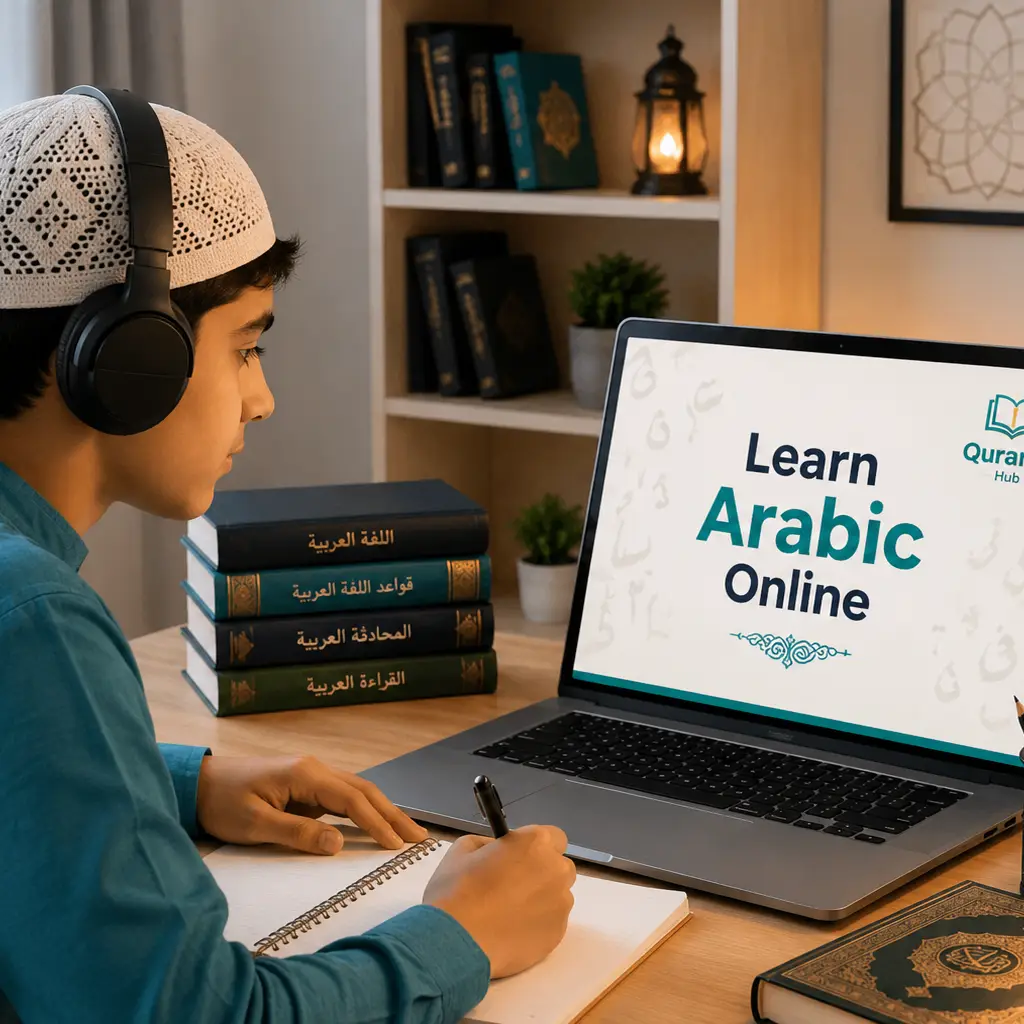
Whichever course your family starts with, the same tutor-matching and free trial process applies across all seven, for every age from Noorani Qaida beginners to the Alim & Aalimah scholar track:





Also Available in the Netherlands
Book Your Free Trial Class
See for yourself before you commit to a plan. Book a free trial class with an Ijazah-certified tutor, matched to your child’s or your own age, level and preferred schedule.
Frequently Asked Questions
With a large Muslim community already in Rotterdam, why choose online over a local teacher?
A large community doesn’t always mean a spot in the class or teacher you actually want. Online, one-on-one classes give a tutor’s full attention every session, without a wait for a place to open up.
Can my child join Tafseer classes, or is that only for adults?
Tafseer suits older children and adults who already read fluently and want to understand meaning, not just recitation — the tutor adjusts depth to age.
Is a female Quran teacher available in Rotterdam?
Yes, as a standard option at no extra cost.
What age should my child start Noorani Qaida?
Most children start between ages 4 and 7, though older beginners and adults join at their own pace too.
How much do online Quran classes cost in Rotterdam?
€30/month for 8 classes, up to €45/month for 20 classes, one-on-one, 30 minutes each. Tafseer costs €70 a month for 12 classes, three days a week.
Is there a free trial before I have to pay?
Yes, every course starts with a free trial class with a real tutor.
Does scheduling account for Rotterdam’s specific school holiday dates?
Yes — the Netherlands’ Zuid-region holiday dates often differ from other Dutch regions, and your class schedule is rebuilt around your family’s actual term dates each year rather than a generic calendar.