
Short answer: Yes, online Quran classes can be safe for kids — but only with a provider that’s specific about how: one-on-one only (never group video calls with strangers), an identity-verified and reference-checked tutor, sessions a parent can sit in on or have recorded, and a real free trial before you pay. QuranlyHub runs on exactly this model, with a female tutor option for daughters, from $30/month.
If you searched something like “is online Quran classes safe for kids” or “how do I know a Quran teacher is actually qualified,” you’re asking the right question — and most providers answer it badly. Nearly every academy’s website says some version of “certified and background-checked teachers” and stops there, with no detail on what that actually means. This guide answers the specific questions US parents ask before trusting anyone with their child: safety mechanics, what “Ijazah-certified” really means, female-tutor availability, age to start, what actually happens in a trial class, real pricing, and how online compares to a local mosque program.
Is It Actually Safe? What to Check Before You Trust Anyone With Your Child
“Certified and background-checked” is the single most repeated phrase across online Quran academies — and the least specific. Here’s what actually matters, and what QuranlyHub does about each one:
- One-on-one only, never a group call with a stranger: every class is a private session between your child and their assigned tutor — not a shared classroom link.
- Identity-verified and reference-checked before teaching a single lesson: a tutor doesn’t get matched with a student until this is done, not after.
- You can be visible in the session, and lessons can be recorded on request: nothing about the class needs to happen somewhere you can’t see.
- No direct, unsupervised contact channel between tutor and child: scheduling and communication run through you, the parent, via WhatsApp — not a side chat between your child and their tutor.
- A genuine free trial first: you meet the actual assigned tutor in a real class before paying anything, not a sales call with someone else.
If a provider can’t tell you specifically what “background-checked” involves, that’s worth asking about directly before you enrol — for any academy, not just this one.
What Does “Ijazah-Certified” Actually Mean?
Almost every academy uses the word “Ijazah” as a badge without explaining it. An Ijazah is a formal certification of authorization: a teacher receives it from their own teacher only after reciting the Quran to them accurately, verse by verse, and being personally certified competent to teach it onward. It’s a traceable chain of transmission, teacher to teacher, back through history — not a diploma from a course, and not something a self-taught reciter can simply claim. Being able to recite the Quran well doesn’t automatically make someone able to teach it correctly to a child; an Ijazah is specifically what verifies both.
Can I Request a Female Teacher for My Daughter?
Yes — a female tutor is available as a standard option for daughters, at no extra cost and with no separate waiting list. If you’d prefer your son learn from a female tutor at a young age too, or a male tutor for either child, just say so when you book your free trial. This is a direct choice you make, not something left to whoever happens to be free.
What Age Should My Child Start?
There’s no single correct age, and any provider claiming otherwise is oversimplifying a genuinely open question. Informal exposure — short surahs, the word “Allah,” simple duas — can start as early as a parent likes. Formal, structured learning (Noorani Qaida, reading the Arabic letters) usually works best once a child can sit through a focused 20-30 minute activity, which for most children lands somewhere between ages 4 and 7. An older child or teenager starting from zero isn’t behind — pace is set individually either way, and sessions for younger children (roughly ages 4-8) run shorter than sessions for older kids and adults.
What Actually Happens in the Free Trial Class?
Most academies mention a “free trial” without explaining it. Here’s exactly how it works: message us on WhatsApp with your child’s age and current level, and we’ll arrange a time. The trial is a real class with a real tutor — not a sales call — over video (Zoom, Skype, Google Meet or WhatsApp video, whichever suits your family), where the tutor assesses your child’s current level and you get a feel for their teaching style before committing to anything. No card is required or stored to book it, and there’s no obligation to continue afterward.
What If My Child and Their Tutor Aren’t a Good Fit?
It happens, and it’s not something to just live with. Message us on WhatsApp and we’ll match your child with a different tutor — teaching style, pace and personality matter for a child staying engaged, and there’s no reason to force a mismatch through an entire course.
Real Pricing: What You Actually Pay
Most academies show one number with little explanation of what it includes. Here’s the full breakdown — every plan is one-on-one, not shared, with a dedicated Ijazah-certified tutor:
| Plan | Classes / Month | Schedule | Price |
|---|---|---|---|
| Weekend Plan | 8 classes | Sat & Sun | $30/month |
| 3 Days a Week | 12 classes | Any 3 weekdays | $35/month |
| 4 Days a Week Most Popular | 16 classes | Any 4 weekdays | $40/month |
| 5 Days a Week | 20 classes | Mon to Fri | $45/month |
Sessions run 30 minutes for most courses; Hifz and the Alim & Aalimah scholar track use a 40-minute session at a higher rate — message us on WhatsApp to confirm that figure. Younger children (roughly ages 4-8) are matched to shorter, age-appropriate session lengths within these plans. Every plan is billed monthly with no long-term contract, includes a free trial class, weekly progress updates, and the same dedicated tutor throughout — not a rotating roster. Enrolling more than one child from the same family gets each additional sibling a 10% discount. See the full pricing page for every course and country.
Online Quran Classes vs. a Local Mosque or Weekend School
This is a genuine trade-off, not a one-sided sales pitch. A local mosque or weekend Islamic school gives your child a peer group — the social benefit of not being “the only Muslim kid” — which online one-on-one classes can’t replicate. But most weekend programs run just one or two hours a week, in a shared class of a dozen or more children with one teacher’s attention split between them, at a fixed time that doesn’t move for anyone. Online, one-on-one classes flip that: your child gets a tutor’s full attention every session, scheduled around your family’s actual week, with real progress you can track — at the cost of that in-person peer community. Many families end up doing both: mosque for community, online for the individual attention and pace a group class can’t give.
My Child Gets Bored or Doesn’t Understand the Arabic — What Then?
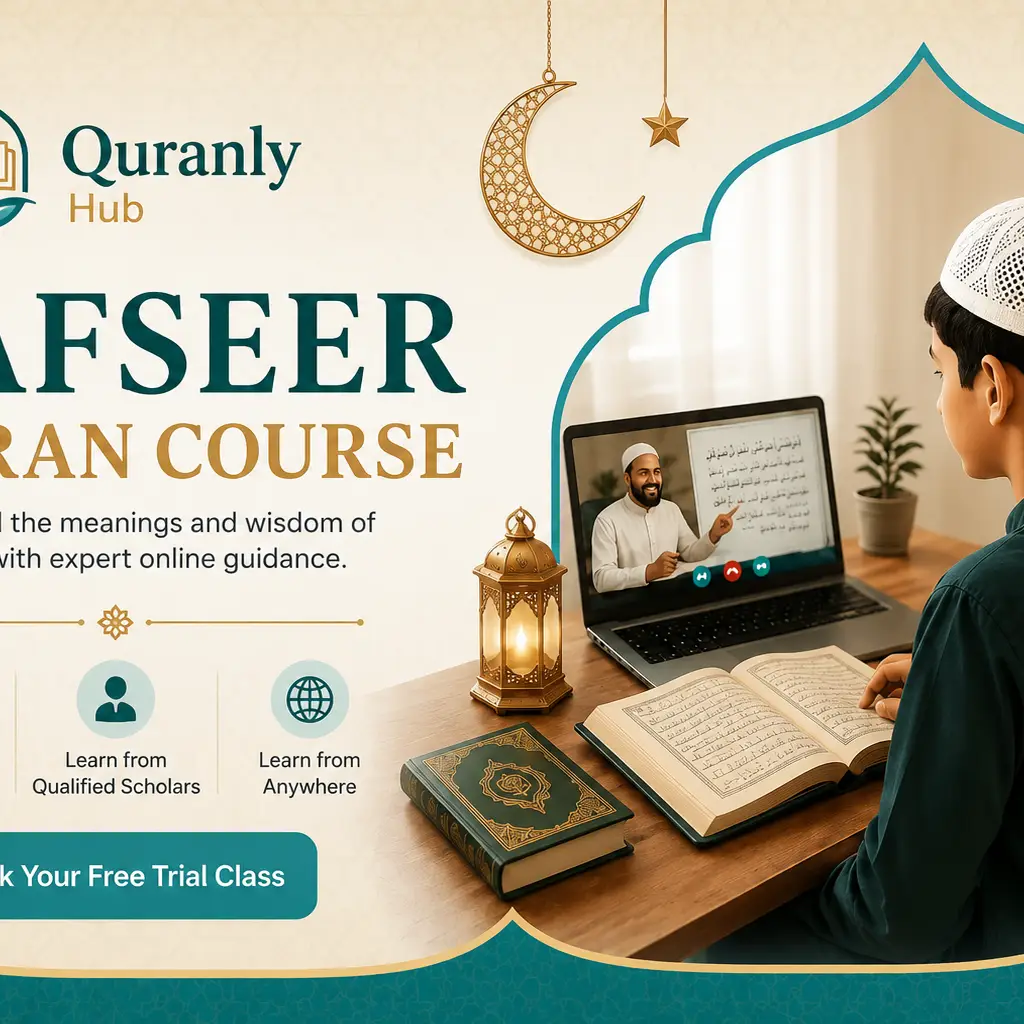
This is one of the most common reasons kids disengage from Quran learning: memorizing or reciting Arabic sounds with no idea what any of it means. It’s also rarely addressed by academies focused purely on recitation speed. QuranlyHub’s Tafseer course exists specifically for this — explaining what a verse actually means, in English or Urdu, alongside (not instead of) correct Tajweed recitation, so a child’s Quran learning connects to something they understand rather than pure repetition. For younger children specifically, tutors build in short story-based explanations of the prophets and simple context around what’s being recited, rather than pure drill.
All 7 Courses, One Platform
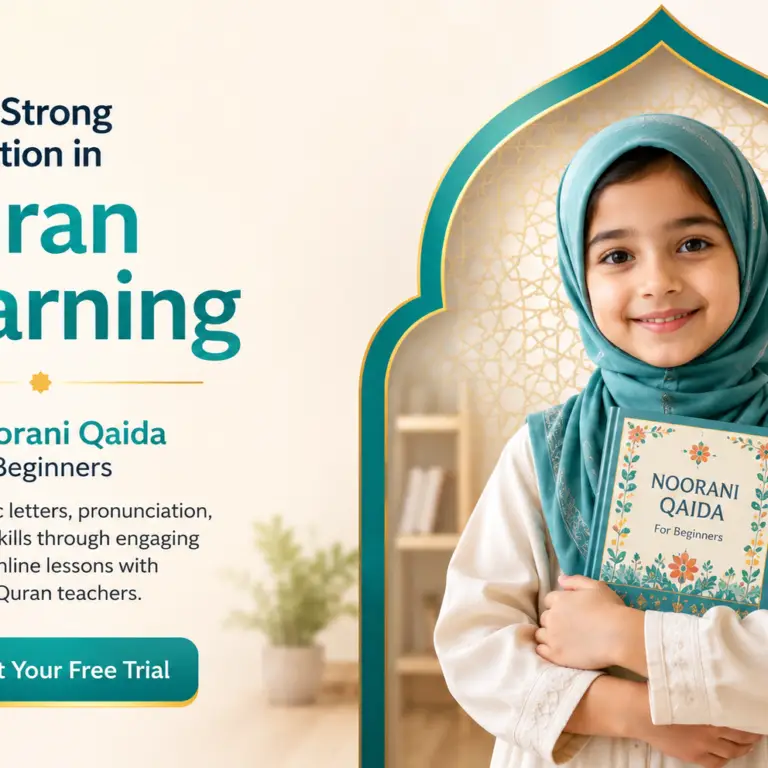
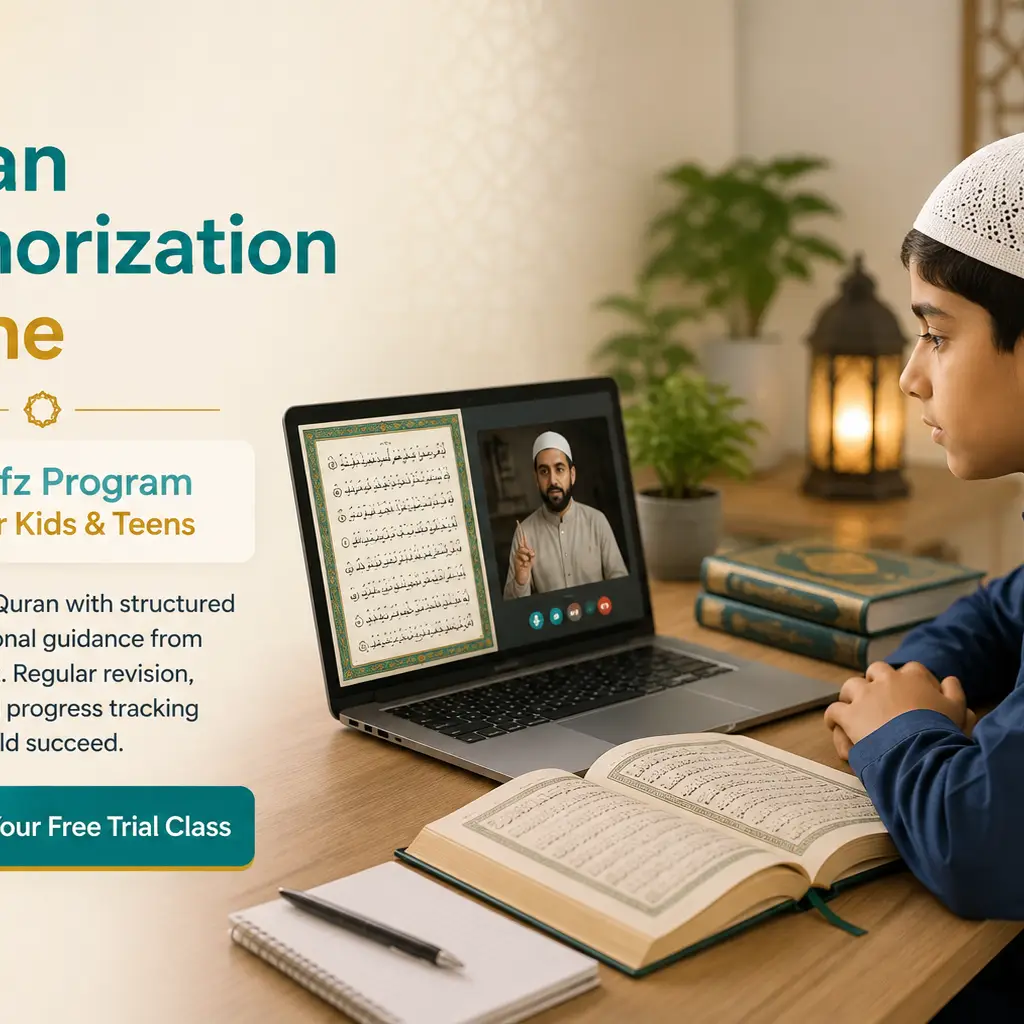
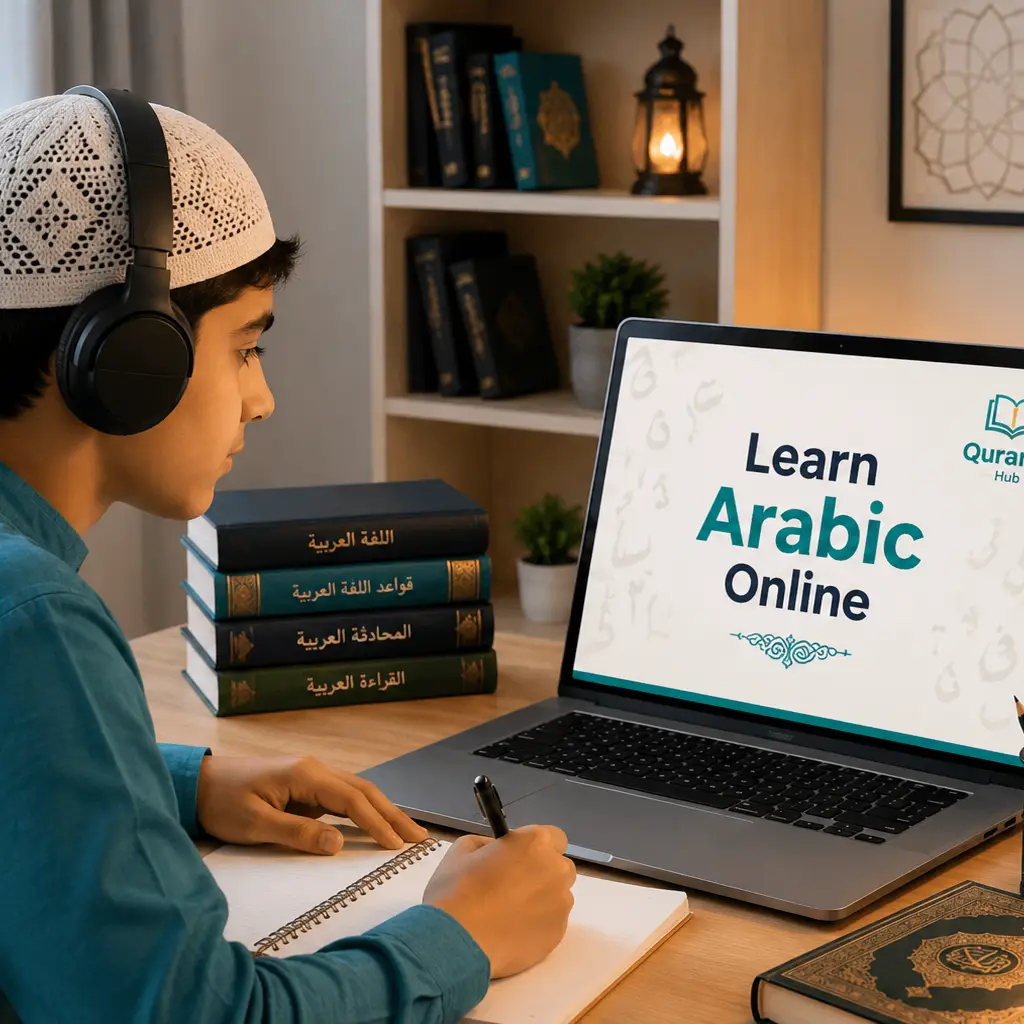
Whichever course your child starts with, the same tutor-matching, free trial and one-on-one format applies across all seven, from complete beginners through to the Alim & Aalimah scholar track for older teens and adults:


How to Enrol
- Message us on WhatsApp with your child’s age, current level and preferred days — and your tutor gender preference if you have one.
- Take a free trial class with the actual tutor who’d teach your child — no card, no obligation.
- Confirm your plan and start regular weekly classes with the same tutor each time.
More on Quran Classes for Kids
This guide focuses on safety, trust and choosing the right provider. For other angles, see our guides on what to expect at every age, trial classes and fees in more detail, keeping kids motivated, classes for special needs children, and our full USA city-by-city guide.
Frequently Asked Questions
Is it safe for my child to be alone on a video call with a Quran teacher?
Every class is one-on-one with an identity-verified, reference-checked tutor, and you’re welcome to be visible in the session throughout. Lessons can also be recorded on request, and all scheduling runs through you via WhatsApp, not a private channel between tutor and child.
What does “background-checked” actually mean here?
Tutors are identity-verified and reference-checked before they’re matched with any student — not after a complaint. If you want more detail on a specific tutor before your child’s trial, just ask on WhatsApp.
What is an Ijazah, and why does it matter?
An Ijazah is a formal authorization to teach, given by a teacher to a student only after verifying their recitation is accurate — a traceable chain of transmission, not a course certificate. It’s what separates someone who can recite well from someone qualified to teach a child correctly.
Can I request a female teacher for my daughter?
Yes, as a standard option at no extra cost and no waiting list — just mention it when you book your free trial. The same applies if you’d prefer a male tutor.
What age should my child start learning Quran?
There’s no single right age. Informal exposure can start anytime; structured lessons like Noorani Qaida usually work best from around age 4-7, once a child can sit through a focused 20-30 minutes. Older children and teenage beginners start from zero at their own pace too.
What actually happens in the free trial class?
It’s a real class with the tutor who would actually teach your child, not a sales call — they assess your child’s level and you see their teaching style firsthand. No card is required or stored, and there’s no obligation to continue.
How much do online Quran classes for kids actually cost?
From $30/month for 8 classes (weekends only) up to $45/month for 20 classes (Monday to Friday), 30 minutes each, one-on-one. Hifz and Alim & Aalimah use a longer 40-minute session at a different rate. A 10% discount applies for each additional sibling.
Is there a long-term contract?
No — plans are billed monthly, and you can adjust or stop anytime by messaging us on WhatsApp.
What if my child and their assigned tutor aren’t a good fit?
Message us and we’ll match your child with a different tutor. Pace, personality and teaching style all affect whether a child stays engaged, so a mismatch isn’t something to just push through.
My child gets bored or doesn’t understand the Arabic — is that normal?
It’s a very common reason kids disengage, and it’s usually a sign recitation isn’t being connected to meaning. Our Tafseer course and story-based explanations for younger children address this directly, alongside correct Tajweed.
Online classes vs. our local mosque program — which is better?
They serve different needs. Mosque programs offer a peer community online can’t match; online one-on-one classes offer a tutor’s full attention and a schedule that fits your week, which a fixed group class often can’t. Many families use both.
What platform are classes taught on?
Whichever works for your family — Zoom, Skype, Google Meet or WhatsApp video. No special software purchase is required.
Is a female Quran teacher available, or only male tutors?
Both are available as a standard choice — you pick when you book your free trial, at no extra cost either way.
Do you teach kids outside a specific US city or state?
Yes — classes run live over video, so families anywhere in the USA get the same tutor options, pricing and scheduling. See our full USA city-by-city guide if you’re comparing local options too.