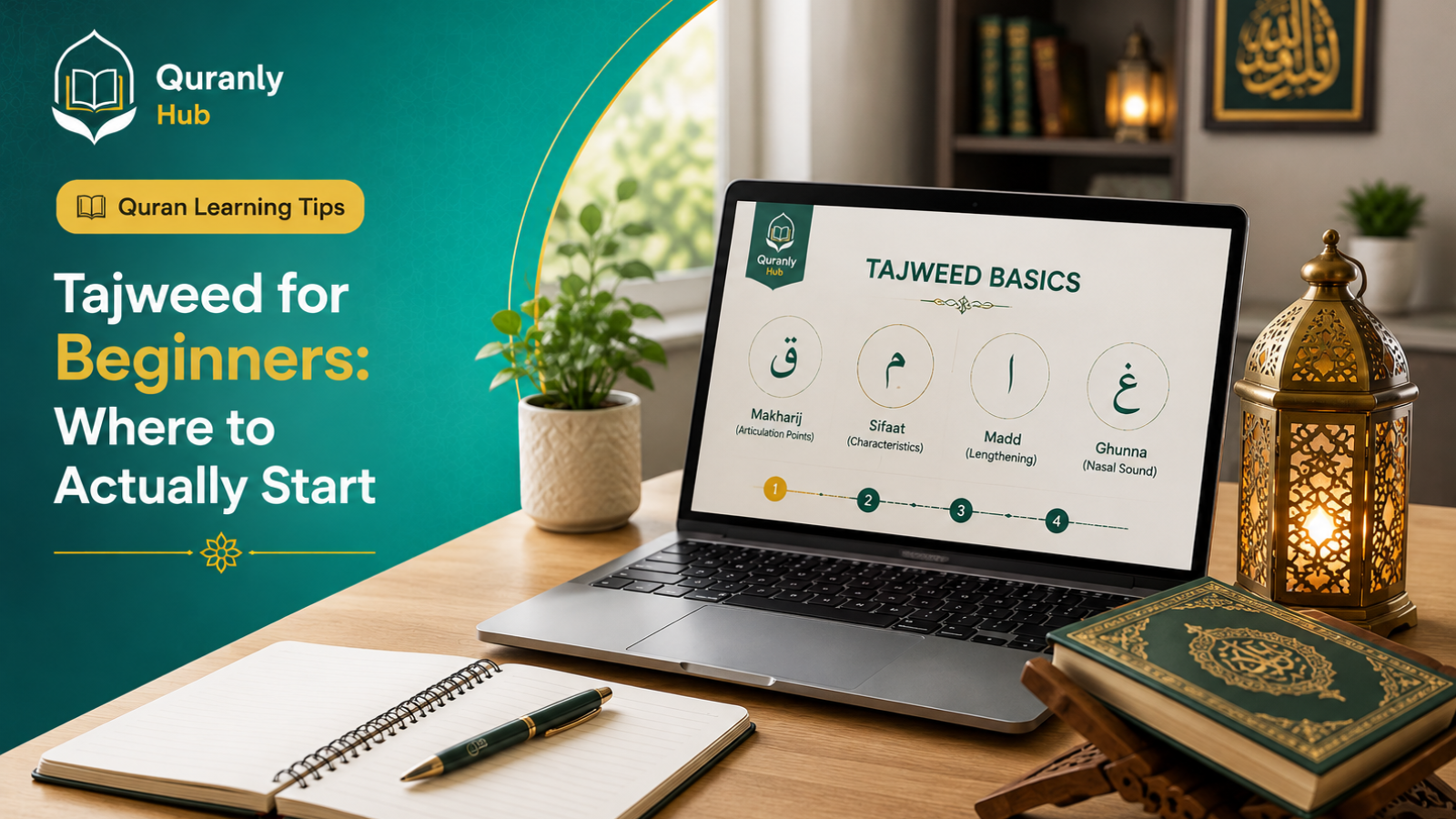

Short answer: Advanced Tajweed doesn’t replace what you already learned, it refines it. Where basic Tajweed teaches you to pronounce letters correctly and apply the core rules, advanced Tajweed covers the details that only start to matter once your basic recitation is already solid: precise Sifaat (letter qualities), the full Madd categories and their exact counts, detailed Waqf and Ibtida (stopping and starting) rules, and catching your own Lahn al-Khafi, the subtle “hidden” mistakes a casual listener wouldn’t notice but a trained ear would. You’re generally ready for it once you can read fluently with correct basic Tajweed and want to lead prayer, teach others, or work toward an Ijazah.

A lot of students hit a point where they read correctly, know the main rules, and still feel like something’s missing, or get told by a teacher that their recitation is “good, but not quite there yet.” That gap is usually exactly what advanced Tajweed is for. Here’s what it actually covers, and a realistic way to tell if you’re ready to start.
What Basic Tajweed Actually Leaves Out
Basic Tajweed gets you reading correctly: Makharij (where each letter is produced), the core noon and meem rules, and simple Madd. That’s enough to recite accurately, and it’s genuinely most of the work. What it doesn’t usually cover in depth is the layer of precision that separates correct recitation from refined recitation, subtle articulation differences, exact timing, and catching your own small, repeated habits.
What Advanced Tajweed Actually Covers
- Full Sifaat precision. Beyond knowing a letter’s articulation point, advanced study covers its qualities in detail, why two similar-sounding letters are actually distinct, and how to consistently produce that distinction.
- Complete Madd categories. Basic Tajweed usually covers Madd generally. Advanced study covers the full range of Madd types and their exact counts, so elongation is consistent rather than approximate.
- Detailed Waqf and Ibtida. Precisely where and how to stop and restart, beyond the basic “stop at a full stop” idea, including how a poorly placed pause can change meaning.
- Ra and Lam Al-Jalalah rules. When these letters are pronounced heavy versus light, a distinction basic courses often only touch briefly.
- Lahn al-Khafi, the hidden mistakes. Small, habitual errors that don’t sound obviously wrong to an untrained ear, small timing drift, slightly incorrect Ghunna, but that a trained teacher can identify and correct.
None of this replaces basic Tajweed. It’s built directly on top of it, which is exactly why starting advanced study before basics are solid tends to backfire, there’s nothing yet to refine.
How to Tell You’re Actually Ready
A few honest signs, rather than a fixed rule:
- You can read fluently with correct Makharij and the core noon, meem, and Madd rules applied consistently, without stopping to think about each one.
- A teacher has told you your basics are solid, ideally more than once, since a single good session doesn’t confirm consistency.
- You want to lead prayer (as an Imam), teach Tajweed to others, or work toward an Ijazah, all of which require this level of precision.
- You’ve noticed, or been told, that something in your recitation feels slightly off, even though you can’t identify what.
If basic rules still require conscious effort to apply, that’s not a failure, it just means more time with foundational Tajweed first is the better next step, not a sign to skip ahead.
Why a Teacher Matters More Here, Not Less
Lahn al-Khafi exists specifically because these mistakes are hard to catch yourself, that’s the whole definition of “hidden.” The same self-correction ceiling covered in our guide on common Tajweed mistakes applies even more at this level: the errors get smaller and more habitual the further along you are, which makes an outside, trained ear more necessary, not less.
A Realistic Path Into Advanced Study
- Confirm your basics are genuinely solid, through direct assessment by a qualified teacher, not self-judgment.
- Start with Sifaat and Madd precision, the two areas most students notice the biggest early improvement in.
- Move into detailed Waqf and Ibtida, once precision in individual letters and elongation is consistent.
- Work on Lahn al-Khafi last, since catching hidden habits is easiest once everything else is already refined and the remaining errors are genuinely subtle.
Frequently Asked Questions
What’s the actual difference between basic and advanced Tajweed?
Basic Tajweed covers correct pronunciation and the core rules needed to recite accurately. Advanced Tajweed refines that recitation further, precise Sifaat, complete Madd categories, detailed Waqf and Ibtida, and catching subtle habitual mistakes.
How do I know if I’m ready for advanced Tajweed?
If you read fluently with correct basics applied consistently, and a teacher has confirmed this more than once, you’re likely ready. If basic rules still take conscious effort, foundational Tajweed is the better next step first.
Do I need advanced Tajweed to lead prayer or teach?
Generally, yes. Leading prayer as an Imam, teaching Tajweed to others, and working toward an Ijazah all require the precision that advanced study specifically covers.
What is Lahn al-Khafi?
It refers to subtle, habitual recitation mistakes that don’t sound obviously wrong to an untrained listener but are identifiable by a trained teacher, things like slightly inconsistent timing or Ghunna.
Can I skip basic Tajweed and start with advanced rules directly?
It’s not recommended. Advanced Tajweed refines habits that need to already exist, skipping ahead usually means there’s nothing solid yet to refine, which slows progress rather than speeding it up.
How long does advanced Tajweed study typically take?
It varies by student and how much time is spent weekly, but it’s typically an ongoing refinement process measured in months of consistent practice rather than a short, fixed course.
Refining What You’ve Already Built
Advanced Tajweed is about precision, not starting over, and precision is hardest to judge in your own recitation. QuranlyHub’s Advanced Tajweed course is taught one-to-one by Ijazah-certified tutors who assess exactly where your recitation stands before building a plan around it. Book a free trial class and find out what’s actually left to refine.
What is the difference between basic Tajweed and Advanced Tajweed?
Basic Tajweed covers letter articulation (makharij) and the core noon-sakinah rules needed to read correctly. Advanced Tajweed adds Madd elongation rules, Waqf and Ibtida (stopping rules), and Qalqalah, refining recitation from technically correct to genuinely fluent.
How do I know if I am ready for Advanced Tajweed?
If you can read Quran text accurately with correct basic pronunciation and rarely mispronounce letters, you are ready. Your tutor can confirm this in a free trial by listening to a passage and identifying whether remaining mistakes are basic or advanced-level issues.