Short answer: most searches for a “free quran learning center near me” don’t actually find a genuinely free, structured local center, they find either a mosque-run class with limited spots and a waiting list, or a paid academy that offers a free trial rather than a free ongoing program. That’s not a scam, free structured Quran education is genuinely hard to sustain, since a qualified teacher’s time still has to be paid for somehow. The honest alternative most families end up choosing is a paid online academy with a real free trial class upfront, live and one-to-one, rather than continuing to search for a “center” that may not exist nearby.
“Quran learning center near me” is one of the most searched phrases from families looking for structured Quran education, and it makes sense, a physical center feels more trustworthy than an app or a random online tutor. But the search results rarely match the search intent. Here’s what’s actually out there, and a more realistic way to think about the “free” and “near me” parts separately.
Why “Near Me” Often Comes Up Short
A Quran learning center, in the traditional sense, needs enough local demand and enough qualified teachers in one place to run classes consistently. That combination exists reliably in a handful of large cities and rarely elsewhere. Search “quran institute near me” from a smaller town or a country with a small Muslim population, and the honest result is often one or two options, both already at capacity, or nothing within a reasonable drive at all. This isn’t a sign you’re searching wrong, it’s a genuine supply problem that online classes were built to solve.
What “Free” Actually Tends to Mean
When a center or academy advertises as free, it usually falls into one of a few categories, worth knowing before you commit time to signing up:
- Genuinely free, community or mosque-funded. These exist, but usually have limited capacity, a waiting list, and group class sizes rather than individual attention, since volunteer or subsidized teacher time is finite.
- Free trial, paid ongoing. The most common model among online academies: a real free class or two, then a paid monthly plan if you continue. This is honest as long as the free part is clearly labelled, which it should be before you book.
- Free basic content, paid structured course. Free recitation audio, translations, or recorded lessons, with live, personalized teaching kept as a paid tier. Useful for casual learning, not a substitute for a structured course with correction.
None of these is inherently better, they suit different needs. A genuinely free group class can work well if you don’t need individual attention and can wait for a spot. A free-trial-then-paid model tends to suit families who want to start sooner and get one-to-one correction from day one.
What a Real Learning Center Actually Provides (and What Doesn’t Require One)
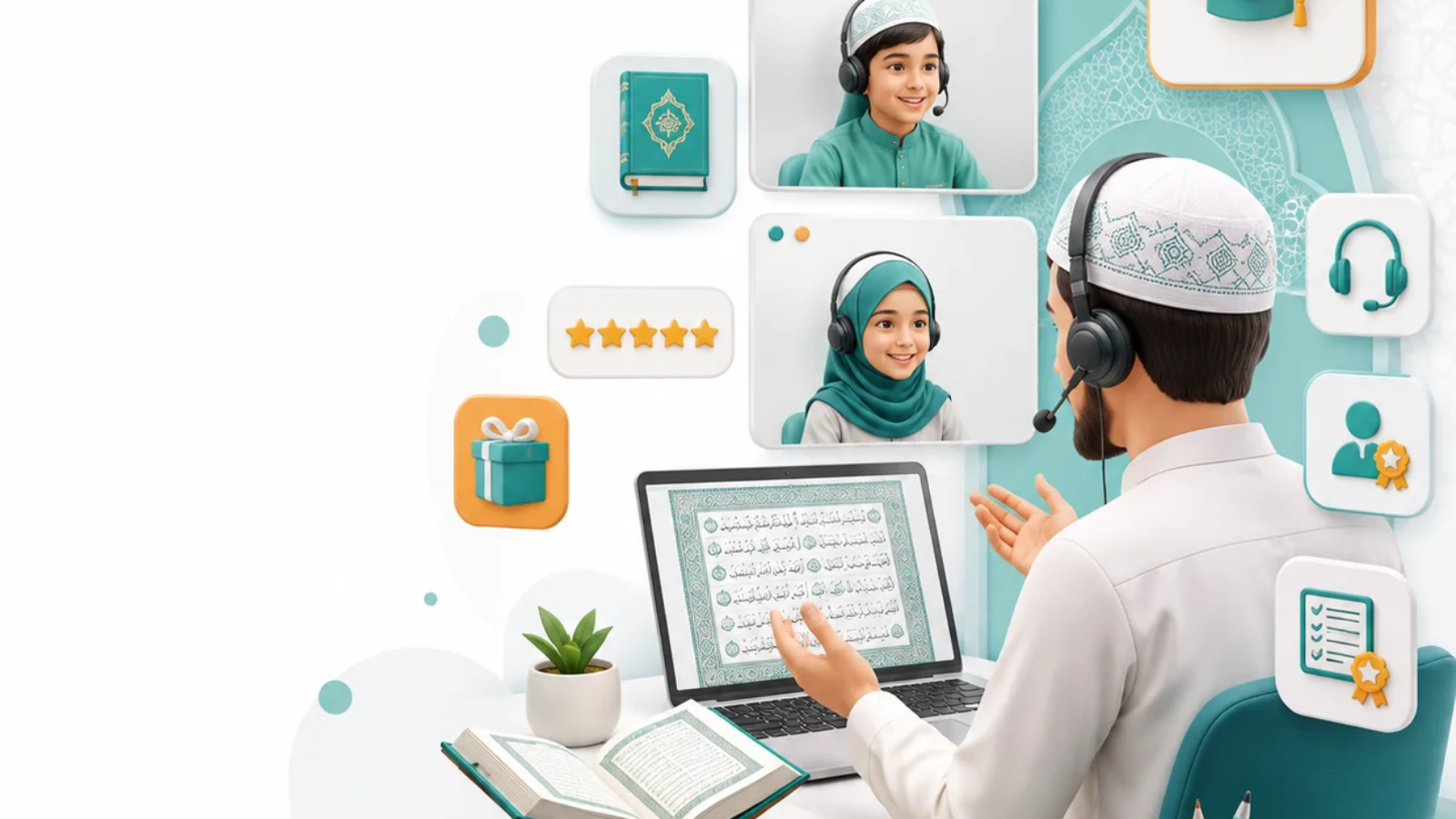
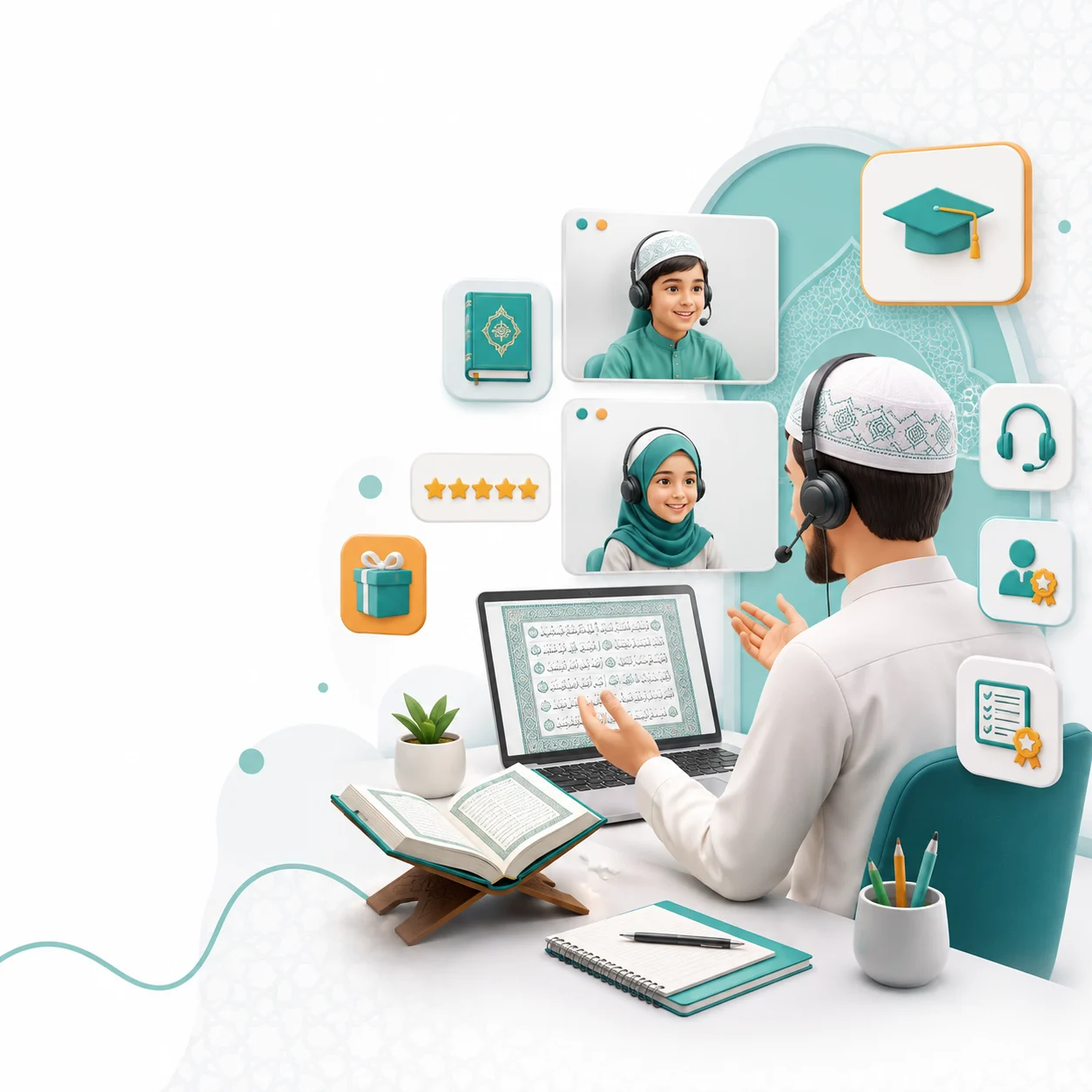
A good local center offers structure, a curriculum, a consistent teacher, and someone checking progress rather than a student teaching themselves from an app. None of that actually requires the physical building, it requires the structure and the teacher. QuranlyHub is built around exactly that: Ijazah-certified tutors, a set curriculum from Noorani Qaida through Tajweed, Hifz, Tafseer and beyond, and live, one-to-one video sessions, the “center” experience without being limited to whoever happens to teach within driving distance of your home.
Free Quran Classes Near Me: A More Realistic Search
If a genuinely free, in-person option is your priority, a local mosque is usually the most reliable place to actually ask, availability changes too often to be represented accurately by a search result. If a paid option with a real free trial and one-to-one attention is acceptable, online removes the “near me” constraint entirely and usually gets a student started faster than waiting for a local spot to open up.
What to Actually Check Before Enrolling Anywhere
Whether it’s a center you found nearby or an online academy, the same few checks apply before you commit any real time: is the teacher’s Ijazah or qualification actually verifiable, not just claimed; is the free part clearly explained upfront, with no vague “contact us for pricing” once you’re already invested; and does a trial session actually let you see how the teacher handles your specific situation, a distracted child, a complete beginner, someone returning after years away, rather than a generic demo. A provider that answers these plainly before you sign up is generally more trustworthy than one that makes you ask twice.
Related Reading
See also: Quran classes near me vs online, compared, and Online Quran teacher near me.
Frequently Asked Questions
Is there really a free quran learning center near me?
Sometimes, usually a mosque-run class, but availability and capacity vary a lot by location and often change faster than search results reflect. Calling a local mosque directly is more reliable than searching online for this specifically.
What’s the difference between a free trial and a genuinely free course?
A free trial is one or a few classes before a paid plan starts. A genuinely free course has no ongoing cost but is usually group-based with limited spots, since teacher time still needs funding from somewhere.
Why can’t I find a Quran institute near me?
Running a physical center needs enough local demand and enough qualified teachers in one place, which only reliably exists in certain cities. Smaller towns or countries with a smaller Muslim population often genuinely don’t have a nearby option.
Is online Quran learning as good as a physical center?
For live, one-to-one instruction, online often gives more individual attention than a group class at a physical center would, since a session isn’t shared across several students.
Do free quran classes near me usually include Tajweed and Hifz?
It depends on the provider. Basic reading is common in free or low-cost options; structured Tajweed correction and Hifz revision cycles are more often part of paid, individually taught programs since they need consistent, one-to-one tutor time.
Should I wait for a local center or start online now?
That depends on how urgent starting is. A free trial class online costs nothing to try and can begin immediately, so many families use it to start now rather than staying on a local waiting list indefinitely.
Start Without Waiting on “Near Me”
You don’t need a physical center nearby to get real structure and a dedicated teacher. QuranlyHub’s Ijazah-certified tutors teach one-to-one, live, from Noorani Qaida through every stage of Quran learning. Book a free trial class and start this week instead of waiting for a spot near you.
Are free Quran learning centers near me actually free, or is there a catch?
Local mosque-run or community Quran centers are often genuinely free, but usually mean group classes with less individual attention, and availability depends entirely on what exists in your specific area. A free trial with an online academy is a way to compare that against one-to-one online teaching.
Is a local Quran learning center better than online for young children?
It depends on the child and the center’s quality more than the format itself. Some children do well in a local group setting, others benefit more from the individual attention and pace control that one-to-one online classes provide, especially if a local center’s group size is large.