Short answer: Yes, kids and adults can learn Quran online together as one family, but not in the same lesson. Each person gets their own one-to-one class with an Ijazah-certified tutor, matched to their actual age and level, usually booked back-to-back so the whole family’s Quran learning fits into one evening rather than several separate arrangements.
Already know your child is a complete beginner? See our guide to what to expect at each age. Returning to the Quran as an adult after years away? Start here instead — this guide is for families trying to work out how the two fit together.
Parents looking for online Quran classes for kids and adults are usually trying to solve two things at once: get their children started properly, and finally learn — or relearn — the Quran themselves, without paying for or coordinating two completely separate services. At QuranlyHub, that’s exactly how most multi-generation families actually use us: a working parent doing a 60-minute Tajweed class after work, and their two children doing 20-minute Noorani Qaida lessons with the same tutor straight after school, same evening, one WhatsApp thread for all the scheduling.
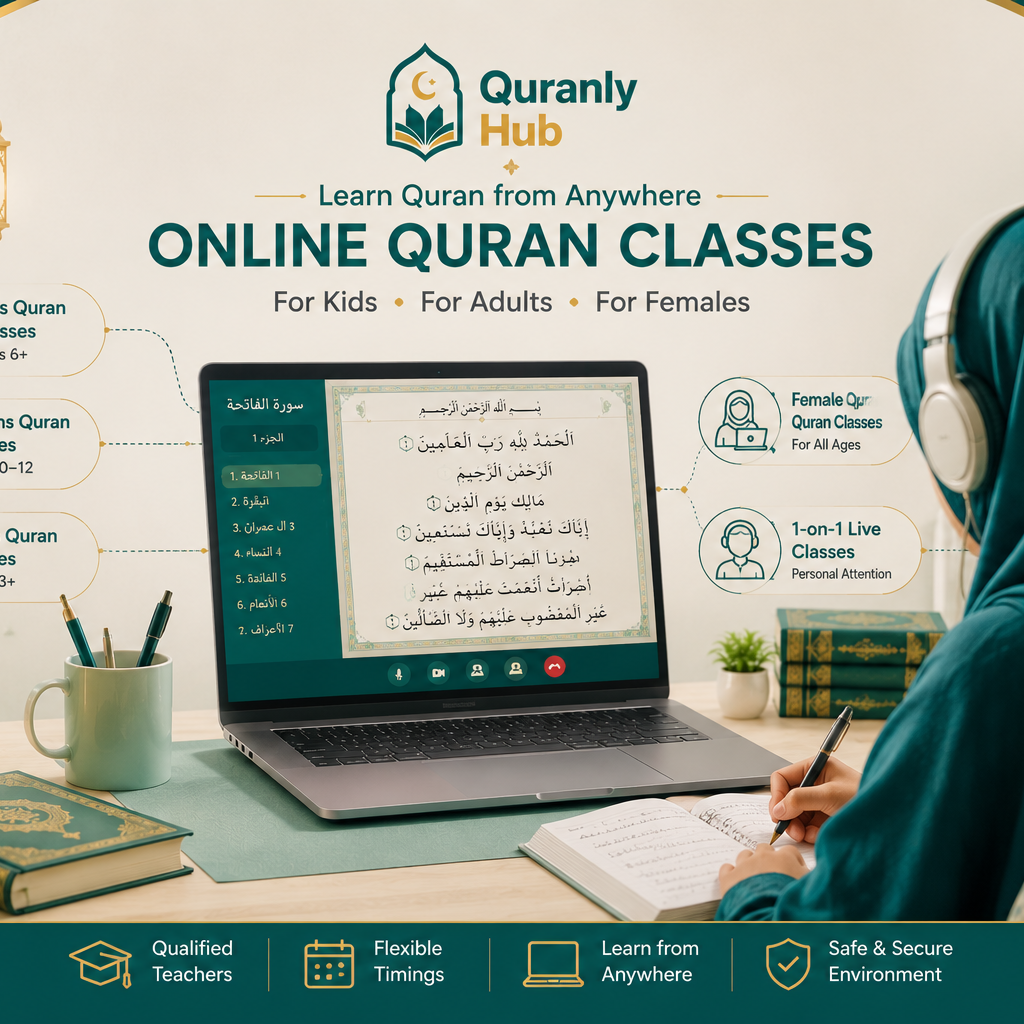
Can Kids and Adults Really Learn Together?
Not in the literal sense of sitting in the same lesson. A 6-year-old learning the Arabic alphabet and a 35-year-old parent working through Tafseer need completely different pacing, so mixing them into one class would shortchange both. What “learning together” actually means in practice is one platform, one booking relationship, and often one tutor covering the whole family across separate one-to-one sessions.
That distinction matters because a lot of “family Quran class” marketing implies a shared group lesson. A group setting can’t isolate whose recitation actually needs correcting, which is exactly the problem one-to-one teaching solves. Each family member is assessed individually — a teacher listens to Makharij (letter articulation), Madd, and existing Tajweed habits before assigning a single lesson — so nobody is restarted from the alphabet unnecessarily, and nobody is rushed past a foundation they haven’t actually built.
Kids vs Adults: What’s Actually Different
The Quran and the underlying rules of Tajweed don’t change between a child and an adult learner. What changes is how it’s taught, how long each session runs, and how fast a realistic timeline actually is.
Session Length and Attention Span
Younger children typically do best with shorter, more frequent sessions — around 20 to 30 minutes — because attention genuinely drops off past that point at that age. Adults concentrate for longer and generally get more out of fewer, deeper sessions of 45 to 60 minutes, where there’s room to actually sit with a difficult Tajweed rule or a Tafseer discussion rather than moving on before it’s understood.
Teaching Style: Repetition vs Analytical Understanding
With children, tutors lean on repetition, short stories, and a fair amount of encouragement to keep a lesson engaging — the goal is building a habit that sticks, not just covering material. With adults, the same tutor usually shifts to a more analytical approach: linking a rule or verse to something in daily life, explaining the “why” behind a Tajweed rule rather than just the “what,” and moving at whatever pace actually suits that person’s schedule and prior exposure.
How Long Hifz Actually Takes at Each Age
Children commonly complete a full Hifz programme over three to five years with consistent daily revision. Adults who start memorization can sometimes move faster — two to four years with full dedication — because of stronger existing reading fluency and Arabic exposure, but adult life (work, other children, less flexible mornings) is honestly the more common reason an adult’s Hifz timeline stretches out, not any lack of ability. Neither pace is “better”; the honest answer is that it depends on how much consistent time a person can actually give it, at any age.
One Family, Multiple Learners: How Scheduling Actually Works
Every student — child or adult — is still taught one-to-one, so each person’s pace and level is assessed and tracked separately. What changes for a multi-person household is purely logistics: most families message us once on WhatsApp with everyone’s rough level and availability, and we try to schedule the whole household’s classes back-to-back or on the same evening, often with the same tutor where that’s a good fit across ages, rather than juggling separate bookings, separate tutors, and separate apps for every family member.
If a parent and child end up with different tutors — which happens when, say, a child needs a female tutor and the adult’s schedule only lines up with a different one — that’s fine too. The scheduling coordination still runs through the same WhatsApp thread, so it doesn’t turn into multiple separate relationships to manage.
Family and Sibling Pricing
QuranlyHub’s plans start at $30/month for 8 classes (30 minutes each) and $40/month for 16 classes, with Ijazah-certified tutors either way. A 10% family discount applies whenever more than one family member enrolls — so a parent and child, or two siblings, both get the reduced rate automatically, with no separate registration fee for the second enrollment.
Each family member also gets their own free trial class before anything is paid for — the discount only applies once you’re ready to enrol more than one person, not to the trial itself.
Which Course Should Each Family Member Start With?
This is usually where families overthink it. In practice, the starting point almost always comes down to whether someone can already read Arabic letters correctly, not their age:
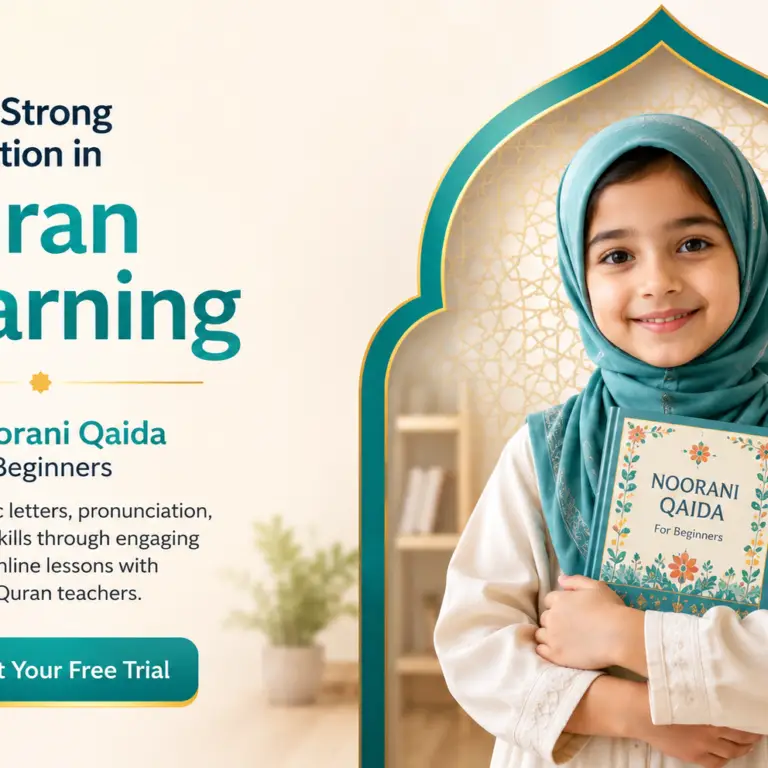
- A child who has never learned Arabic letters starts with Noorani Qaida, regardless of age — this step isn’t skippable and rushing past it is the most common reason self-taught reading stays shaky for years.
- A child who already reads but makes Tajweed mistakes moves into Quran Reading with Tajweed, where a tutor can catch a mispronounced letter the moment it happens.
- An adult returning to the Quran after years away — read this first — usually also starts with Noorani Qaida or a Tajweed refresher, and there’s genuinely no embarrassment in that; it’s the single most common adult enrollment at QuranlyHub.
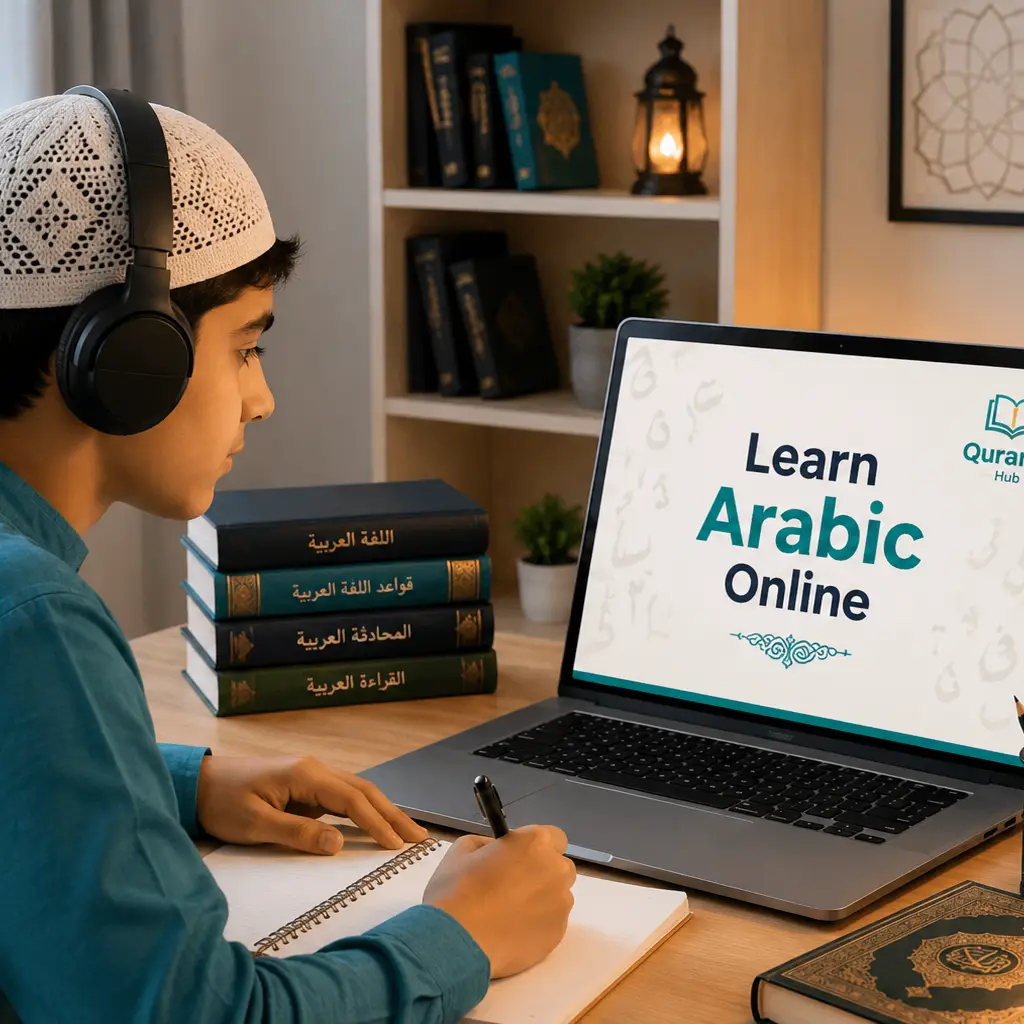
- An adult who already reads confidently more often wants Tafseer to understand meaning, or Quranic Arabic to engage with the text directly rather than through translation.
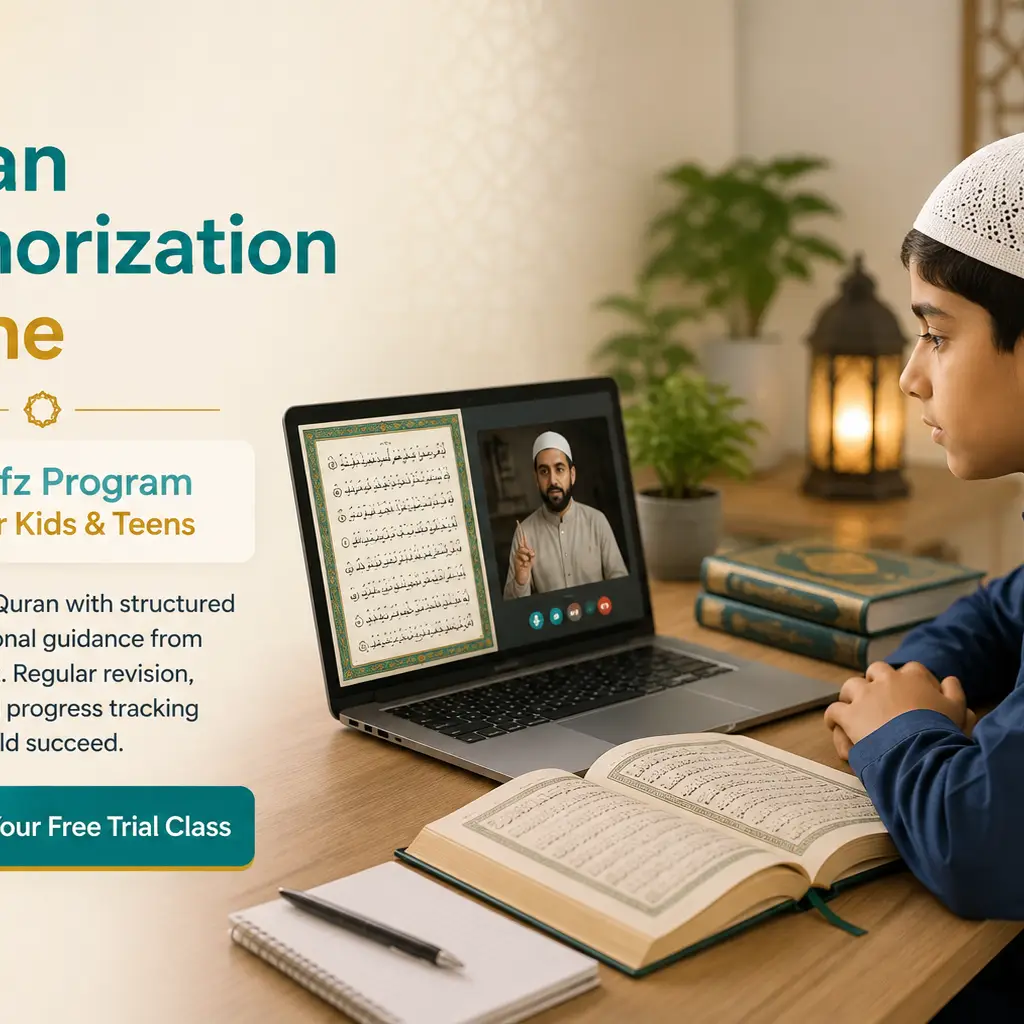
- Anyone ready to memorize, at any age, can start Hifz once their reading and Tajweed are solid enough that they’re not memorizing mistakes along with the verses.
All 7 Courses, One Platform
Whichever course fits each family member, everyone learns through the same platform, the same WhatsApp booking, and — where it makes sense — the same tutor.




Start Your Family’s Free Trial with QuranlyHub
At QuranlyHub, we teach kids, adults, beginners, sisters, and whole families across the USA, UK, Canada, Australia, Pakistan, and the Gulf — often on the same evening, through the same WhatsApp thread. Whether your child is starting the Arabic alphabet for the first time, or you’re finally getting back to the Quran yourself after years away, the first step is the same: a free trial class for each person, so you can judge the teaching style before committing to anything.
Book your family’s free trial classes today and start learning together, at each person’s own pace.
Frequently Asked Questions
Can my child and I take classes with the same tutor?
Often, yes, if the tutor’s availability and your family’s schedule line up well. It’s not guaranteed for every family, since a child’s course and an adult’s course can call for different tutor strengths, but we try to make it work where it genuinely suits both learners.
Do kids and adults follow the same curriculum?
The course structure is the same — Noorani Qaida, Tajweed, Hifz, Tafseer, Quranic Arabic — but the pace, session length, and teaching style are adjusted for the individual, not just their age. A confident 10-year-old reader may move faster than an adult beginner, and that’s normal.
Is there a discount for enrolling multiple family members?
Yes. A 10% family discount applies once more than one family member enrolls, with no extra registration fee for additional members.
How long are classes for kids vs adults?
Younger children typically do 20 to 30-minute sessions to match their attention span. Adults usually get more out of 45 to 60-minute sessions, where there’s time to go deeper into a single topic.
Can my child join if they’ve never read Arabic before?
Yes. That’s exactly what Noorani Qaida is for — starting from Arabic letters and building up, at whatever age your child is.
Can I start Hifz as an adult, even starting late?
Yes. Plenty of QuranlyHub’s Hifz students are adults. It typically takes two to four years with consistent effort, sometimes longer around work and family commitments, but age on its own isn’t the limiting factor — consistency is.
Do you offer female tutors for daughters and mothers alike?
Yes, a female Quran teacher is available on request for girls and women in the family, in separate classes, at no extra cost.
How do we schedule multiple family members without it getting complicated?
One message on WhatsApp with everyone’s level and availability is usually enough. We try to line up back-to-back slots, and often the same tutor, so it doesn’t turn into separate bookings and separate conversations for every family member.
Is there a free trial for each family member, or just one?
Each family member gets their own free trial class. The 10% family discount only applies once you’re ready to enrol more than one person on a paid plan.