Live one-to-one online Quran classes for kids, adults, beginners and sisters. Certified, Ijazah-holding tutors teach Quran reading, Tajweed, Hifz, Tafseer and Quranic Arabic, starting with a free trial class.

Learn Quran. Live Guidance.
Live one-to-one online Quran classes for kids, adults, beginners and sisters. Certified, Ijazah-holding tutors teach Quran reading, Tajweed, Hifz, Tafseer and Quranic Arabic, starting with a free trial class.

What you can genuinely learn for free, where free resources stop working, and how to combine free practice with one paid correction step.
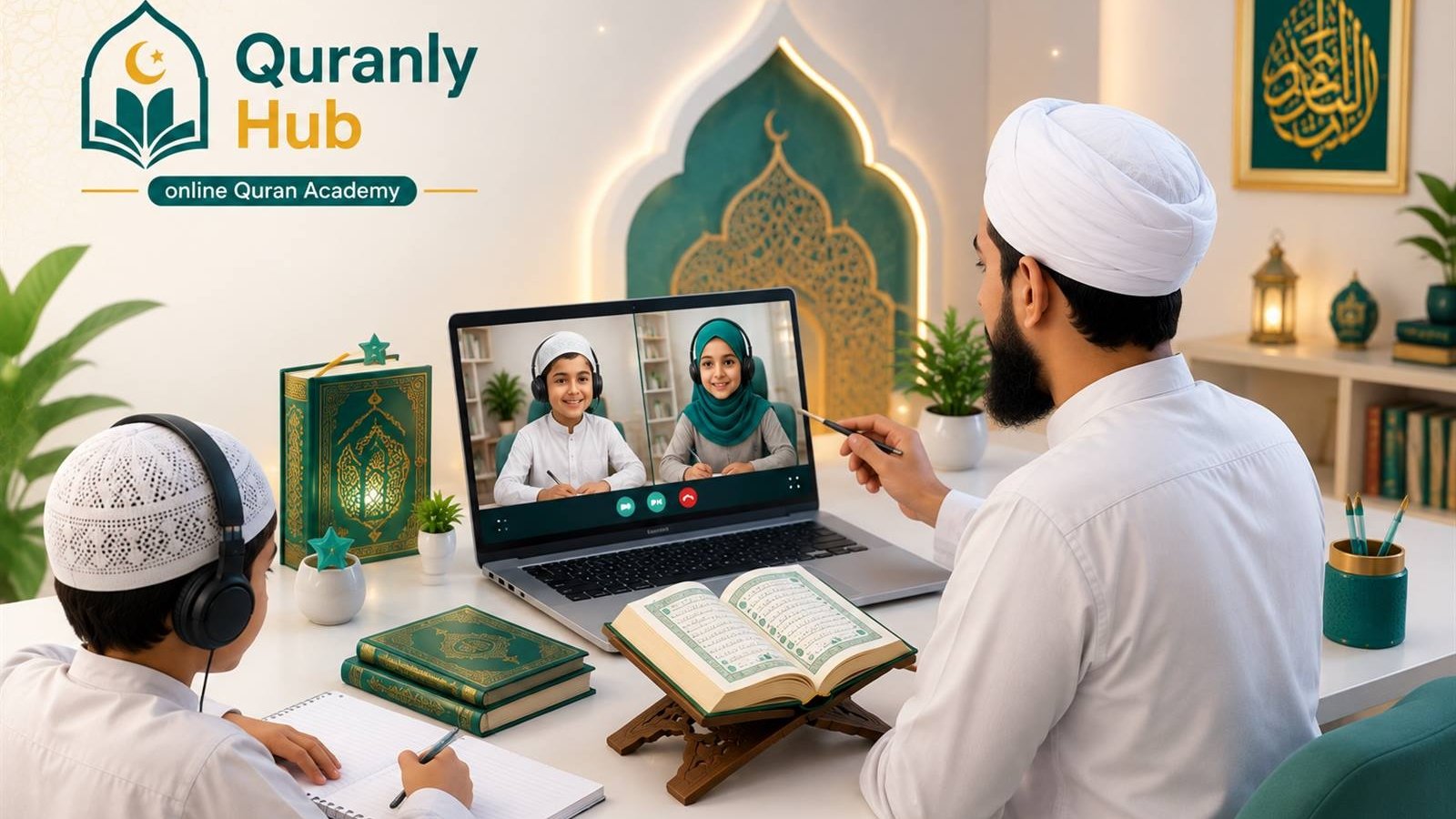
Short answer: a beginner-level online Quran class starts with an assessment of what you already know, then places you into Arabic letter recognition or basic reading practice. No prior knowledge of Arabic is required to start.
Already comfortable reading and want to see how classes are structured for every age group? See our overview of certified online classes for adults, sisters and kids. Curious what you can try for free before committing? See what’s actually free and what isn’t.

“Beginner” covers a wide range of people: children starting school-age Islamic education, adults who never learned Arabic script, and reverts approaching the Quran for the first time. A good beginner program should adjust to which of these you are, not put everyone through the same fixed lesson plan.
In practice, three groups usually enroll as beginners: kids just starting Islamic studies, adults (including reverts) who have never learned Arabic script, and people who can technically sound out letters but read slowly and inaccurately. Each starts in a slightly different place, which is why a short assessment matters before lessons begin.
QuranlyHub structures beginner learning into two stages, and most students only need to know which one applies to them right now:
| Course | Best for | Focus |
|---|---|---|
| Noorani Qaida | Complete beginners, no Arabic letter knowledge | Arabic alphabet, letter joining, correct pronunciation basics |
| Quran Reading with Tajweed | Can already read some Arabic, want fluency and accuracy | Full Quran reading with proper Tajweed rules |
This depends heavily on age, consistency, and how much time is practiced between lessons. There is no fixed number of weeks that applies to everyone, and any program promising an exact guaranteed timeline should be treated with caution. What consistently helps is short, regular practice rather than occasional long sessions, and staying with one teacher long enough for them to track your specific weak points.
Adults sometimes assume Quran classes are only for children and feel self-conscious starting from the alphabet stage. This is common and not a barrier. A teacher experienced with adult beginners will move at a pace suited to an adult learner’s schedule and comfort level, without the classroom pacing built for children. If privacy or comfort with a particular teacher’s gender matters to you, that is worth raising before you start. See our guide on female Quran teachers online.
Look for a teacher who assesses before placing you in a level, explains Tajweed rules rather than just modeling them, and is comfortable teaching complete beginners, not only advanced students. Our full breakdown of vetting criteria is covered in how to choose the right online Quran teacher.
Related reading: once you can read the letters, the next step is pronunciation — see how a Quran recitation course online works.
Homeschooling and need to fit this into a real weekly timetable? See our guide on Quran classes for homeschoolers.
If you’ve recently taken your Shahada specifically, see our dedicated guide on Quran classes for new Muslims and reverts, it covers starting Salah and reading together, which most general beginner guides skip.
Grew up Muslim but never actually learned to read? Our guide on learning Quran as an adult who never learned as a child covers that specific, common starting point.
No. Beginner courses like Noorani Qaida start from the Arabic alphabet itself, so no prior knowledge is required.
Yes. Many adult students, including reverts, start from zero. Lessons are paced for adult learners rather than built around a children’s classroom structure.
This varies by schedule and goals. What matters more than frequency is consistency between sessions. Your teacher can help set a realistic weekly pace.
Yes, QuranlyHub offers a free trial class so you can experience a lesson and confirm it is the right fit before enrolling.
Book a free trial and your teacher will assess your level in the first session. Explore Noorani Qaida or Quran Reading with Tajweed, or book a free trial class directly. New to the whole idea of learning online? Our guide to learning Quran online covers how classes work for kids, adults and sisters.
For someone with zero prior knowledge, the first lessons focus on recognizing Arabic letter shapes and sounds, then joining letters together, following the Noorani Qaida structure, before moving to reading actual Quran text.
It depends on the pace of Noorani Qaida completion, but many beginners start reading short, familiar surahs within a few months of consistent lessons, once the alphabet and basic joining rules are solid.

Short answer: yes, you can read the Quran online for free right now, in Arabic script, translation, or transliteration. What most people actually need next is different: a way to learn to read the Arabic text themselves, correctly, with a tutor who can hear and correct mistakes in real time, rather than relying on translation alone or guessing at pronunciation from an app.
If you’re weighing whether a paid tutor is worth it versus free apps, see our breakdown of what’s actually free and what isn’t. Ready to enrol rather than read casually? See how QuranlyHub’s certified online classes work for adults, sisters and kids.

Searching “read Quran online” usually means one of three things: you want the Arabic text, you want a translation you can understand, or you are not sure yet which one you need. This guide covers all three, plus what to do once reading online is not enough and you want to actually learn the letters and recitation yourself with proper, structured guidance from a real teacher.
Free, reputable sites exist for exactly this, and reading online costs nothing and requires no sign-up on most platforms. That part is solved. The harder question is usually what comes after.
These are not interchangeable, and mixing them up is where most beginners get stuck. Arabic script is the only form used in prayer and formal recitation. Translation tells you the meaning but is not recited from in Salah. Transliteration is a training wheel, genuinely helpful for the first few weeks, but it cannot represent Arabic sounds precisely since several letters have no English equivalent, so it should be a stepping stone toward the actual script, not a long-term substitute.
This is the gap most “read Quran online” tools do not address. They give you the text, but not a path to reading it yourself. If the Arabic letters are unfamiliar, that is the actual starting point, not the Quran text itself. A structured beginner course, commonly called Noorani Qaida, teaches the Arabic alphabet, letter joining, and correct pronunciation from the ground up, so reading the Mus’haf becomes something you can do rather than something you look up.
If you can already sound out the letters but want to recite more fluently and correctly, the next stage is Tajweed, the rule set governing how each letter and sound should be pronounced. Reading Quran online on your own and reciting it correctly are two different skills. Audio alone can model good recitation, but a teacher who can hear and correct you gets you there faster and helps avoid pronunciation habits that are hard to unlearn later.
Both work. Reading online is convenient for quick reference, travel, or when you do not have a physical copy on hand. Many people still prefer a printed Mus’haf for regular recitation and memorization, since page layout and physical familiarity support memory. There is no rule requiring one over the other, so use whichever helps you read consistently.
Related reading: for a full breakdown of the free route and its limits, see learn Quran online free: what is actually free.
Yes. Arabic text, translations, and audio recitation are all freely available online through several reputable platforms, with no cost or sign-up required to read.
The Arabic text is the original wording, used in recitation and prayer. A translation conveys the meaning in another language but is a rendering, not the Quran itself in a ritual sense. Most learners eventually want both.
Start with the Arabic alphabet and letter-joining rules through a structured beginner course, rather than jumping straight into the Mus’haf. This is typically the first stage of any Quran-reading program.
No. Reading online gives you access to the text; Tajweed is the set of pronunciation rules for reciting it correctly. You can read without knowing Tajweed, but accurate recitation requires it.
Some students go on to Tafseer to understand meaning, others to Quranic Arabic to read the language directly, and some eventually take QuranlyHub’s Alim & Aalimah course, a longer structured path combining Quran, Tafseer, Hadith, Fiqh and Arabic for students who want to become a certified Islamic scholar rather than stop at fluent recitation, and it is taught in Urdu as well as English for families who prefer that.
QuranlyHub’s Noorani Qaida and Quran Reading with Tajweed classes are built for exactly this transition, from recognizing letters to reading and reciting with confidence, with an Ijazah-certified tutor. Book a free trial class and have your reading assessed before you commit.
Several free apps and websites offer the Arabic text, translation, and transliteration side by side. These are genuinely useful for reading along, but they can’t listen to your recitation or correct pronunciation, which is the specific gap a live tutor fills.
Reading translation helps you understand meaning, but it isn’t a substitute for reading the actual Arabic text, since translation alone changes some nuance and can’t be recited in Salah. Most students combine free translation reading with structured Quran reading and Tajweed classes rather than choosing one over the other.

Short answer: online Quran class prices vary mainly by class format (one-on-one versus group), how often you attend each week, and which course you take, not by a single fixed industry rate. There is no universal number because academies structure their plans differently. What you can control is knowing exactly which factors drive the price up or down, so you can compare providers properly instead of guessing from a homepage number. Whatever the provider, expect most al Quran online academies to price around live one-on-one tutoring time rather than a flat course fee.

If you have been searching for a straight answer and only found vague “contact us for pricing” pages, this is normal in this space, not a red flag by itself. Most academies, including QuranlyHub, prefer to confirm current pricing directly rather than publish a number that goes stale or does not match your specific schedule. What follows is what actually determines the cost, so you know what to ask.
Five factors explain almost all the price difference between online Quran class providers:
Group classes spread the tutor’s cost across multiple students, which is why they are usually the cheaper option per student. The trade-off is pace: a group moves at a pace that suits the average student in it, not any one individual.
One-on-one classes cost more because you are the only student in that session. The tutor adjusts pace, repeats what you personally struggle with, and does not move on until you are ready. For a subject like Tajweed, where mispronunciation habits need to be caught in real time, this difference matters more than it does for many other subjects.
It depends on what is actually holding the student back. If progress has stalled because a group class moves too fast or too slow for your child, or because Tajweed mistakes are not being caught early enough, one-on-one classes usually resolve that directly. If the student is progressing fine in a group setting and simply wants a lower-cost option, group classes remain a reasonable choice.
A useful test: if you have already tried a slower or self-paced option and progress still is not sticking, that is a sign the format, not the price, is the actual problem.
QuranlyHub teaches one-on-one, live online, across Noorani Qaida, Quran Reading with Tajweed, Advanced Tajweed, Quran Memorization (Hifz), Tafseer, and Quranic Arabic. Classes run on a flexible monthly plan rather than a single fixed rate, since frequency and course are set around each student. Message QuranlyHub on WhatsApp with your preferred course and schedule, and you will get current pricing and availability for your time zone before committing to anything, starting with a free trial class.
Whichever academy you compare, ask these directly before paying:
Related reading: if budget is the deciding factor, see exactly what you can learn Quran online free and where paying actually becomes worth it.
Price is only part of the comparison, see our guide on group vs one-to-one Quran classes for what actually changes in individual attention between the two formats.
Studying around a demanding job specifically? See our guide for online Quran classes for busy professionals.
Often, yes, mainly because online classes remove the overhead of a physical location and let you choose a tutor from a wider pool rather than only local options. This is not guaranteed for every provider, so it is still worth comparing directly.
Because pricing usually depends on variables specific to you: course, frequency, and format. A single published number would not apply to most visitors, so many academies confirm pricing directly instead, which also lets them answer scheduling questions at the same time.
Yes, it is a standard way to assess fit before committing to a paid plan, and it is worth using regardless of which academy you choose.
Not automatically. Price reflects format, frequency, and course as much as tutor quality. Use the trial class to judge fit rather than relying on price alone. If you are unsure what to look for beyond price, our guide on how to choose the right online Quran teacher covers what actually matters.
Yes. Foundational courses like Noorani Qaida are usually priced similarly to Tajweed, while Hifz and Tafseer can cost more due to longer sessions or more tutor preparation, depending on the academy.
Often the per-session rate improves slightly with higher frequency, but the total monthly cost still rises since you are buying more tutor time overall.
Ask exactly what’s included per session, how rescheduling works, and whether the price is fixed or can change after the trial. Getting these three answers prevents most billing surprises.
If you are ready to get an actual number for your situation, message QuranlyHub on WhatsApp with your course of interest and preferred schedule, or browse all seven QuranlyHub courses, including Advanced Tajweed and Quranic Arabic, to decide where to start.
QuranlyHub charges $30/month for 8 classes or $40/month for 16 classes (30 minutes each) with an Ijazah-certified tutor. See our full pricing page for every course side by side. Other academies commonly charge 62-143% more for the same class count, so comparing per-class cost, not just the monthly headline price, matters when evaluating options.
Ask directly before enrolling; a trustworthy academy states its full pricing upfront, including what happens if you miss a class or want to change your plan. QuranlyHub’s pricing is exactly what’s advertised, confirmed on WhatsApp before you commit.
Motivation is a design problem, not a personality trait. Five practical changes that keep children engaged in online Quran classes.
Six things you can verify before you pay: certification, beginner method, gender preference, the trial class, progress reporting and scheduling.